
Request an appointment
Reserve your spot with our team in just minutes.
Other Knee Treatments
Does PRP Help an ACL Tear or ACL Reconstruction? What the Evidence Says
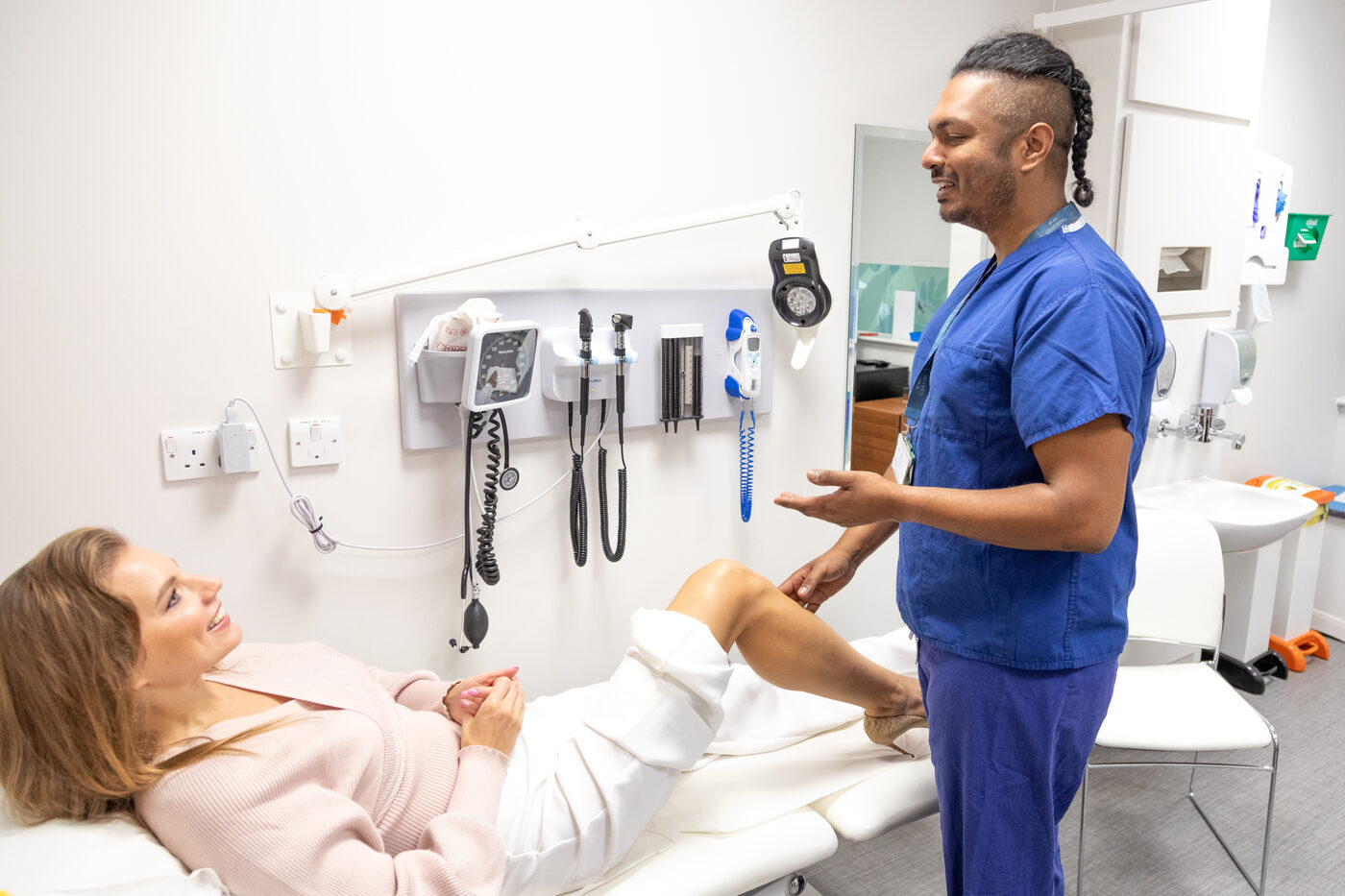
An ACL injury is frightening. One moment you are playing, the next your knee has given way and someone is talking about nine months out. It is natural to look for anything that might help the ligament heal or get you back sooner, and PRP is the treatment patients ask me about most.
PRP stands for platelet-rich plasma. We take a small sample of your own blood, spin it to concentrate the platelets, and place that concentrate where healing is needed. I use it, and I think it has a real place in knee care. For the ACL, though, the trials are clear enough that I would rather tell you now than let you pay for something that is unlikely to change your result.
The short answer
PRP and the ACL at a glance
- A PRP injection will not make a fully torn ACL stable again. If your knee gives way, the answer is rehabilitation, ACL reconstruction, or both.
- For partial ACL tears, the only study with a comparison group found a PRP injection was no better than physiotherapy alone.
- In ACL reconstruction, 13 randomised trials covering 765 patients found PRP did not improve graft healing or knee function.
- PRP may ease pain a little in the first weeks after surgery. It has not been shown to change stability or the return to sport.
- Bone marrow concentrate (BMAC) has one randomised trial showing changes on MRI but no clear benefit for the patient. For micro-fragmented fat (MFAT) in ACL surgery, I know of no clinical trial.
Why the ACL heals so poorly
Most ligaments heal. The ligament on the inner side of your knee, the MCL, usually mends in a brace without an operation. The ACL is different because it sits in the middle of the joint, bathed in joint fluid. When it tears, the blood clot that would normally bridge the two ends and start the repair is washed away before it can do its job.
That is the reason for the interest in PRP, bone marrow and fat. Each is a way of bringing healing signals to a ligament that cannot hold on to its own. It is a sensible idea. The question is whether it changes anything you would notice.
Can PRP heal a partial ACL tear?
You will find clinics quoting a study of 19 professional footballers with partial ACL tears who had PRP placed into the ligament at keyhole surgery. Sixteen returned to their previous level of play (Seijas, 2014). It sounds impressive, but there was no comparison group, and many partial tears in a stable knee do well with good rehabilitation alone.
The one study that did have a comparison group followed 40 patients with partial tears. Half had a single PRP injection into the ligament plus physiotherapy and half had physiotherapy alone. There was no difference between the groups, and across the whole study the treatment failed in about a third of patients (Zicaro, 2021).
So if you have a partial tear and a knee that feels stable, I would put your time and money into strength and controlled return to sport, using the exercise programme I give every patient and a physiotherapist who knows ACL injuries. If the knee is giving way, an injection will not solve that.
Does PRP help ACL reconstruction?
This has been studied more than almost any other use of PRP in the knee, which means we can be fairly confident about the answer.
A review of 13 randomised trials covering 765 patients concluded that PRP did not improve graft healing, did not reduce pain where the graft was taken from, and did not improve knee function (Davey, 2020). A more recent pooled analysis of 24 randomised trials found a small reduction in pain in the short term and no change in knee stability or in how the graft matured (Zhang, 2025). An earlier review suggested the graft might look more mature on MRI a little sooner, with no difference in how patients did (Figueroa, 2015).
Put simply, adding PRP to an ACL reconstruction might make the first few weeks slightly more comfortable. It has not been shown to make the new ligament stronger, the knee more stable or your return to sport faster.
What about BMAC or MFAT with ACL surgery?
BMAC is bone marrow concentrate, drawn from your pelvis with a needle. MFAT is micro-fragmented fat, a small amount of your own fat that is washed and broken into tiny clusters. Both are used mainly for arthritis and cartilage problems, and I explain how I use them on my BMAC page and my knee injections page.
For the ACL there is one randomised trial of BMAC. Eighty patients having a reconstruction with a donor tendon had the graft treated with BMAC or not. The BMAC grafts looked different on MRI at three months and one knee score was better at nine months, but the number of patients who felt a meaningful improvement was the same in both groups (Forsythe, 2022). For MFAT in ACL reconstruction, I know of no clinical trial at all.
Neither is something I would advise you to pay for in order to improve an ACL reconstruction on the evidence we have today.
If your meniscus is torn as well
Many ACL injuries come with a meniscus tear, and saving that meniscus matters as much as reconstructing the ligament. Here there is good news that costs nothing. A meniscus repaired at the same time as an ACL reconstruction heals more reliably than one repaired alone, because the bone tunnels bleed into the knee and bring healing cells to the repair. In a study of 550 patients, adding PRP made no difference in that situation (Everhart, 2019).
I have written a separate page on whether PRP helps a meniscus tear heal, where the answer is more encouraging, and on meniscus repair itself.
What I focus on instead
We don't stack treatments. We do the right things in the right order.
After an ACL injury, the things that change your result are not injections. They are whether you need an operation at all, when it is done, how precisely the new ligament is placed, whether the meniscus and cartilage are protected, and how well the thigh muscle is woken up and rebuilt afterwards. I cover the first weeks of that in detail on my knee exercises page, and the operation itself, including revision surgery, on my ACL surgery page.
Where a biological treatment does have evidence behind it for your knee, such as a cartilage defect found at the same time, I will tell you and explain why. My cartilage transplant page covers that.
How my team and I look after you
My team and I look at the whole of you, not only the scan: your sport, your strength, your work and what you want your knee to do in ten years. We start with the least invasive option that has a fair chance of working. If you need a reconstruction, I use modern, precise keyhole techniques, and my team stays with you through the rehabilitation until you are back doing what you love.
My knee recovery kit page lists what is worth having at home, and you can book an appointment when you are ready.
Torn your ACL and not sure what to do?
Book a consultation. I will examine your knee, go through your scan with you and tell you what I would do in your position.
PRP and ACL Questions
Some people function well without a reconstruction, particularly if the knee feels stable and their sport does not involve twisting and cutting. Others have a knee that keeps giving way, which puts the meniscus and cartilage at risk. The decision depends on your knee, your sport and your goals, and it starts with a proper examination.
The randomised trials do not show that. PRP may reduce pain a little in the early weeks, but it has not been shown to speed up graft healing, improve stability or shorten the return to sport.
The one study with a comparison group found PRP plus physiotherapy was no better than physiotherapy alone. If your knee feels stable, structured strength work is where I would start. If it gives way, an injection will not correct that.
One randomised trial of bone marrow concentrate showed changes on MRI at three months but no clear difference in how patients did. I know of no clinical trial of micro-fragmented fat in ACL reconstruction.
PRP is made from your own blood and serious problems are uncommon. The main downside is cost without a demonstrated benefit, which is why I do not recommend it as routine for ACL reconstruction.
References
- Davey MS, et al. Anterior cruciate ligament reconstruction with platelet-rich plasma: a systematic review of randomized control trials. Arthroscopy. 2020. doi:10.1016/j.arthro.2019.11.004
- Zhang, et al. Meta-analysis of randomised trials of platelet-rich plasma in ACL reconstruction. Front Bioeng Biotechnol. 2025;13:1625271.
- Figueroa D, et al. Systematic review of platelet-rich plasma in ACL surgery. Arthroscopy. 2015;31(5):981-988.
- Zicaro JP, et al. Is a single platelet-rich plasma injection for partial anterior cruciate ligament tears effective? World J Orthop. 2021;12(6):423-432. doi:10.5312/wjo.v12.i6.423
- Seijas R, et al. World J Orthop. 2014;5(3):373-378.
- Forsythe B, et al. Bone marrow aspirate concentrate augmentation may accelerate allograft ligamentization in anterior cruciate ligament reconstruction: a double-blinded randomized controlled trial. Arthroscopy. 2022;38(7):2255-2264. doi:10.1016/j.arthro.2022.01.010
- Everhart JS, et al. Platelet-rich plasma reduces failure risk for isolated meniscal repairs but provides no benefit for meniscal repairs with anterior cruciate ligament reconstruction. Am J Sports Med. 2019;47(8):1789-1796. doi:10.1177/0363546519852616
Patient Reviews
What Our Patients Say
Verified Doctify reviews from patients who have received treatment for knee problems under the care of Dr Arj Imbuldeniya at OrthoLongevity.