
Request an appointment
Reserve your spot with our team in just minutes.
Other Knee Treatments
Knee and Hip Physiotherapists in London I Work With
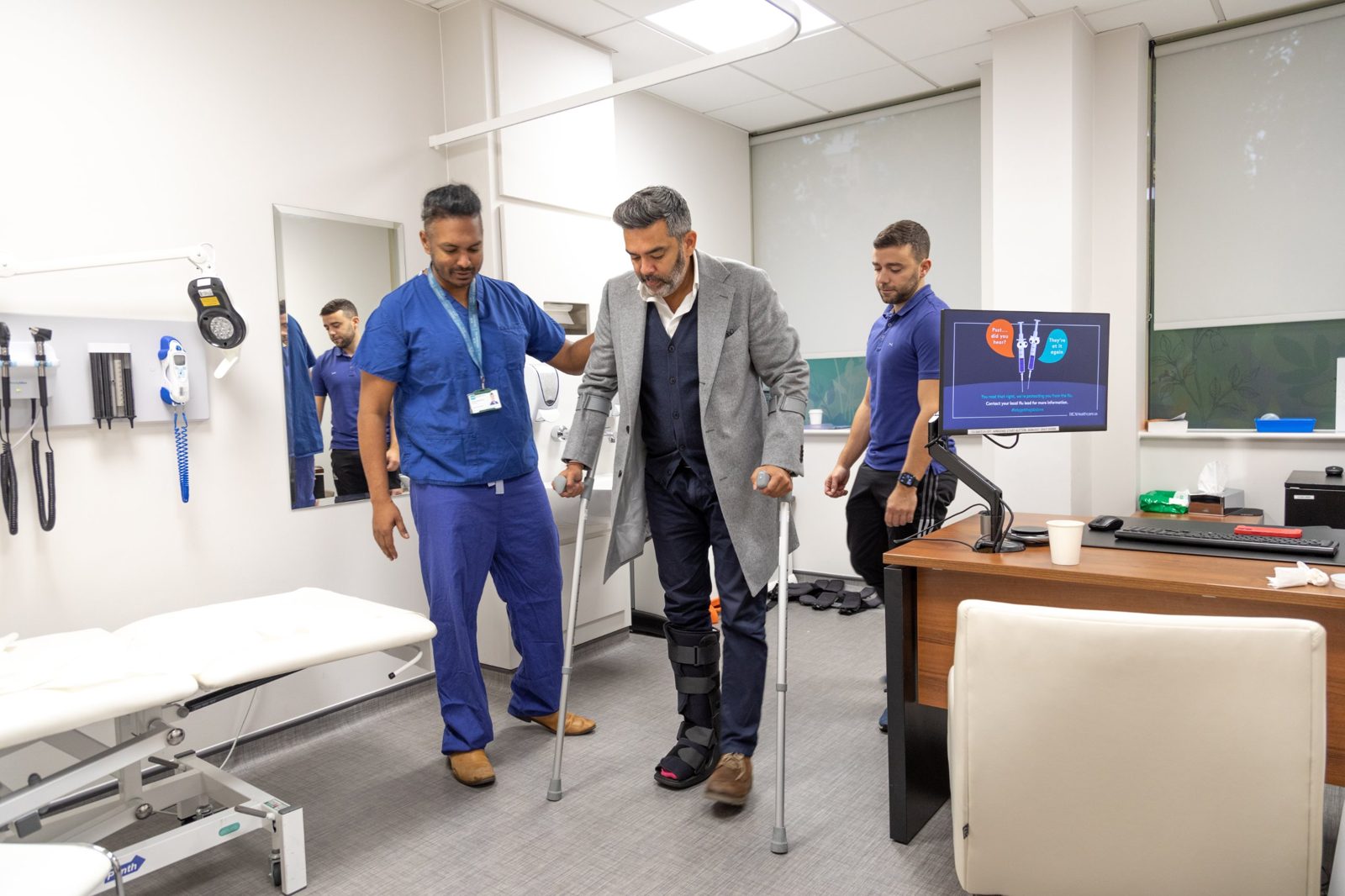
I am Dr Arj Imbuldeniya, a knee and hip surgeon in London, and most of the patients I see do not go on to an operation, because for many of them good physiotherapy and strength work is the treatment. These are the physiotherapists and practices across west and central London that I know and work with, listed by area, with a link to each so that you can contact them directly.
Map
Where to find the physiotherapists I work with
Tap a pin to see the practice and a link to its website. The same practices are listed by area further down this page.
Free 60-second assessment
How old are your knees?
Your knees have a biological age, and it is often not the age on your passport. Of the people who have taken this test, 55 per cent found their knees were older than they are, and one in eight by ten years or more. Sixty seconds, free, and you get one number and the single change that would take the most years off it.
Find my Knee Age, free →Why does the right physiotherapist matter for a knee or a hip?
The right physiotherapist matters because, for most knee and hip problems, the rehabilitation is the treatment, and anything I do is there to support it. A scan can tell me what a knee looks like, but it is the months of patient, progressive loading afterwards that decide how that knee behaves on the stairs, on a run or on a ski slope, and that work is done by a physiotherapist and by you, not by me.
I see knee care go wrong in two directions. Some people are offered an operation before anyone has meaningfully tried to help make them stronger, and others spend a year doing exercises for a knee that needed a surgical opinion in the first month. A good physiotherapist protects you from both, because they know what a knee should be doing at each stage of recovery, and they are quick to ask for another opinion when it is not doing it.
Why do I work so closely with physiotherapists?
I work closely with physiotherapists because most of the people I see need to move better and get stronger far more often than they need an operation, and that is the work physiotherapists do every day. I think of myself as a holistic orthopaedic surgeon, which means looking at the whole person and keeping surgery for the times it is truly needed, and that approach only works as part of a team.
At Lanserhof at The Arts Club in Mayfair I work in exactly this way, alongside the physiotherapy team there and with osteopaths, sports medicine doctors, radiologists, functional medicine specialists, strength and conditioning coaches, sports scientists, nutritionists and sleep coaches, so that each patient has the right people around them. Physiotherapists are the health professionals I work with most often, and a great deal of what goes well for my patients is down to them.
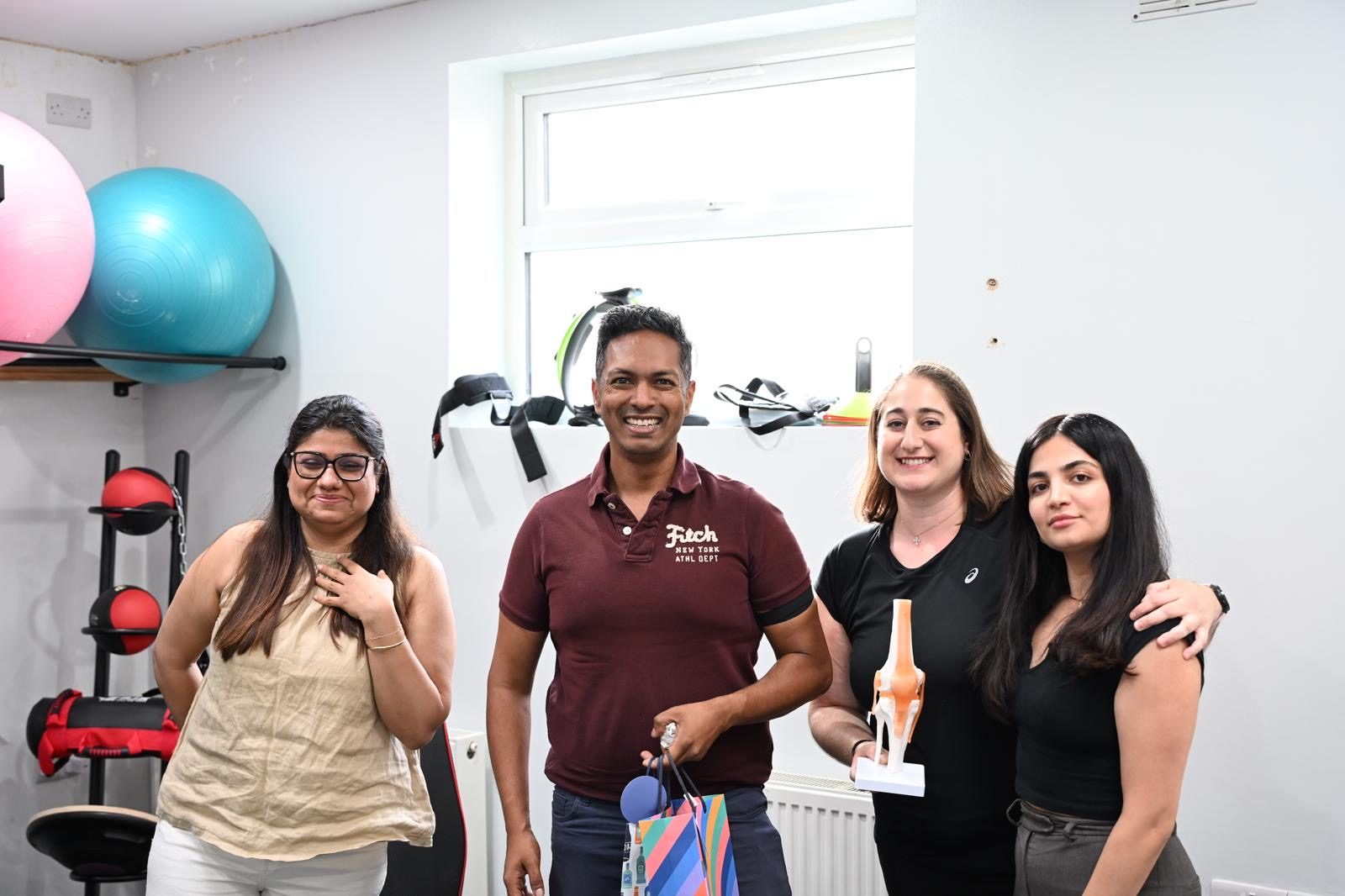
I know the physiotherapists on this page are good because, over the last decade, my patients have come back and told me so. We work closely together for each patient we share, I recommend them, and I am very happy for my own friends and family to see them.
How are physiotherapists trained, and what can they do?
Physiotherapists are degree-trained, regulated health professionals, and many go on to do far more than people realise. In the UK 'physiotherapist' is a title protected by law, so anyone who uses it must have completed an approved degree and be registered with the Health and Care Professions Council, and most are also members of the Chartered Society of Physiotherapy.
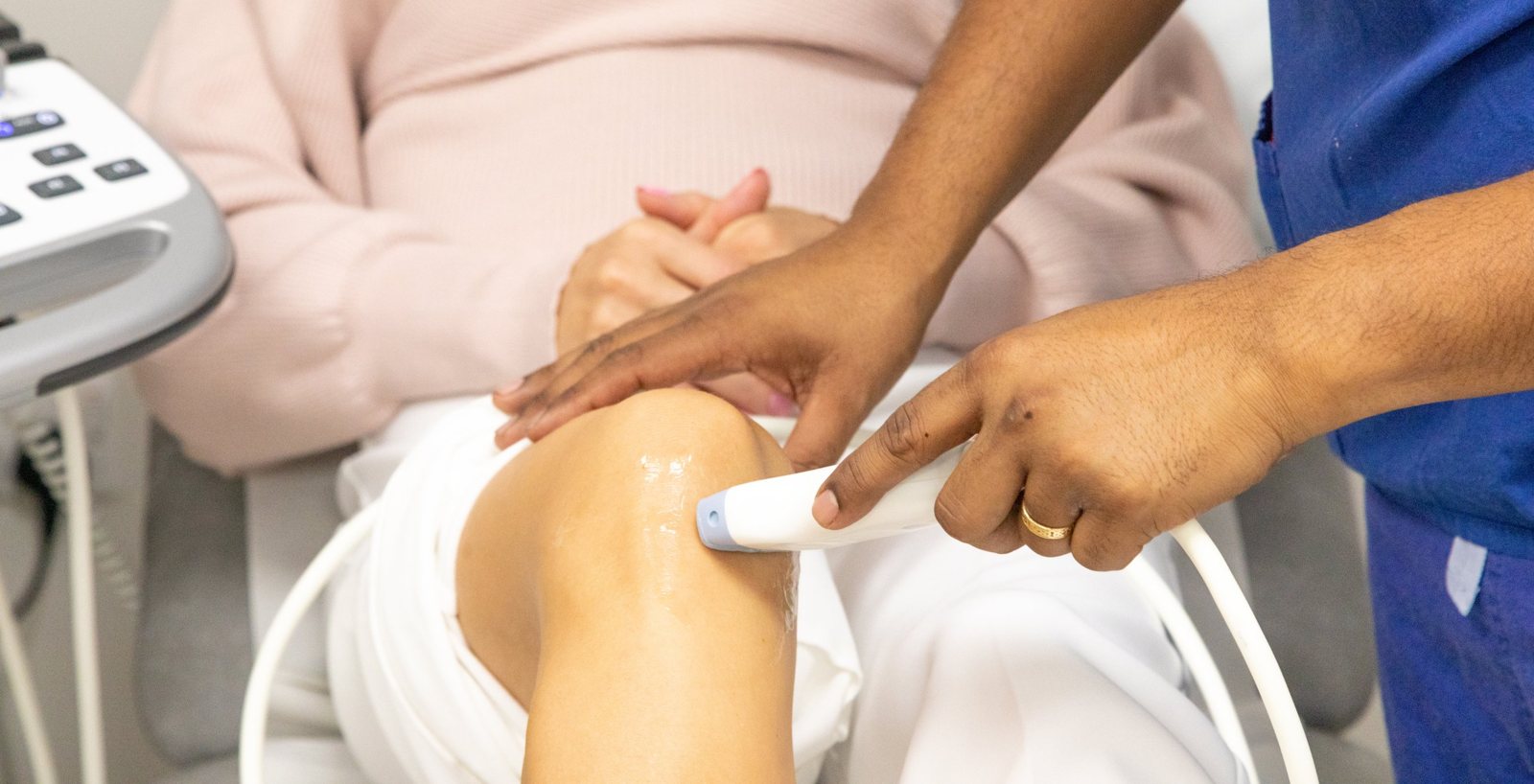
Many take their training much further. In the NHS, experienced physiotherapists work in advanced roles, including as first contact practitioners in GP surgeries, where they are often the first clinician to assess and diagnose a patient with a knee or back problem and to decide who needs a scan or a surgical opinion. Some train as prescribers, some give joint injections, and some are very skilled with ultrasound, which they use to look at a tendon or to guide an injection in the clinic room. I value their judgement, and I am always glad to hear from a physiotherapist about a patient we share.
You can read more about the profession from the Chartered Society of Physiotherapy, and you can check that any physiotherapist is registered with the Health and Care Professions Council.
What should you look for in a knee or hip physiotherapist?
Look for someone who examines you properly, explains what they think is going on in plain words, and gives you a plan that gets harder as you get stronger. Hands-on treatment has its place early on, when a knee is sore and stiff, but it should lead somewhere, and where it should lead is strength, balance and confidence in the leg, built up over months and measured along the way so that you both know it is working.
No two knees get the same plan from me, and they should not get the same plan from a physiotherapist either. Your age, your weight, your sleep, your work, the sport you want to get back to and the time you realistically have in a week, with children or a job to manage, all change what good rehabilitation looks like for you. The physiotherapists I work with treat the person and not the scan, and they think about how the joint will be doing in twenty years as well as in twelve weeks, which is what I mean when I talk about joint longevity and my Joint Health Programme.
Knee and hip physiotherapists in Ealing, Hanwell and Acton
Ealing Physio is on South Ealing Road in W5, where I work with Karthikeyan Krishnaswamy, Chhavi Kalra, Eirini Dimitriadou, Mahnaz Shojaati and Grzegorz Nowak.
Ann McLaughlin Physiotherapy is a long-established practice on Florence Road, a short walk from Ealing Broadway, where I work with Michelle Harford and Tim Knight.
W5 Physio is on Haven Green, beside Ealing Broadway station, where I work with Stewart Ramsay and Antonis Terzakis.
CK Physio is on Elthorne Avenue in Hanwell, where I work with Bryan Kelly and Angela Benjamin.
Zenko Physiotherapy and Sports Therapy is in Acton, inside the Everyone Active centre on the High Street, where I work with James Ng.
Knee and hip physiotherapists in Chiswick, Hammersmith and Kew
Chiswick-Physio is on Chiswick High Road in W4, where I work with Ethan Tomlinson, Harrison Manderville, Ryan Burnham and Nathan Carter.
Onebody Clinic is also on Chiswick High Road, with a second clinic in Notting Hill Gate, where I work with Sarah Morton and Jamie Tsui.
PhysioEdge is on Burlington Lane, next to Chiswick station.
Kim Saha Physiotherapy is in Whitehall Gardens, Chiswick, where I work with Kim Saha.
Ten Health and Fitness is in Barley Mow Passage, Chiswick, where I work with Samantha Rule.
Harley Street Physiotherapy is at the Hogarth Health Club in Chiswick, and also on Wimpole Street in Marylebone.
Sports and Physiotherapy is under the arches at Prebend Gardens, Stamford Brook, where I work with Justin Lucas-Hill.
W6 Physiotherapy is on Hammersmith Road in W6, where I work with Enes Arikan.
Q Sports Physio is on Sandycombe Road in Kew, close to Kew Gardens station, where I work with Craig D'Mello.
Knee and hip physiotherapists in Brentford, Hounslow and Heston
TherapyLogic is on the Great West Road in Brentford, where I work with Sanjay Malik.
Sky Therapy is on Staines Road in Hounslow.
The Magical Hands is on Vicarage Farm Road in Heston.
The Physio Centre is on Salisbury Road in Hounslow, where I work with Saloni Jawle.
Knee and hip physiotherapists in Twickenham, Whitton, Teddington and Hampton
Move Physio is on York Street in the centre of Twickenham, where I work with Patrick Kenny and Lize Nel.
Body Logic Physiotherapy is on The Green in Twickenham, where I work with Paul Seyfried.
West Thames Physiotherapy is on Hounslow Road in Whitton, where I work with Julian Remedios, Lee Remedios and Tracy Roberts.
Physio and Therapy London is on Broad Street in Teddington.
Body First UK is on the High Street in Hampton Hill.
Able Physiotherapy is on the High Street in Hampton, where I work with Alexis Kekeh.
Knee and hip physiotherapists in Richmond
Richmond Physiotherapy is on Hill Street in Richmond, where I work with Pippa Rollitt, Dave Burnett and Tim Robinson.
Performance Physiotherapy is at Richmond Athletic Ground, where I work with Arturo Lawson.
Knee and hip physiotherapists in Kensington, Fulham, Notting Hill and Bayswater
West London Physiotherapy is in Elvaston Mews, South Kensington, where I work with Cameron Tudor.
Six Physio Kensington is on Young Street, just off Kensington High Street.
Physio on the Green is at Parsons Green in Fulham, where I work with Stuart Williams.
Portobello Physio Clinic is near Ladbroke Grove, where I work with Sally Hulke.
OM Physio is on Moscow Road in Bayswater.
Knee and hip physiotherapists in central London and the City
Complete Physio is across central London, with clinics at Angel and at Lime Street in the City, where I work with Pedro Dias.
Six Physio Monument is on Martin Lane, near Monument station, where I work with Amy Yates.
Knee and hip physiotherapists in south west London
Balance Performance Physiotherapy is on Gauden Road in Clapham.
ProPhysiotherapy is in Smith's Yard, Earlsfield, where I work with Alexandra Kallistratou.
Wandsworth Physiotherapy and Osteopathy is on Old York Road in Wandsworth, where I work with Shreya Gupta.
West Wimbledon Physio is on Kingston Road in Raynes Park, where I work with Rosemary Lillie.
Knee and hip physiotherapists further west, in Buckinghamshire and Surrey
GX Physio is on East Common in Gerrards Cross, where I work with Tim Barsellotti.
Scorpio Clinics is on Christchurch Road in Virginia Water.
What is rehabilitation really like?
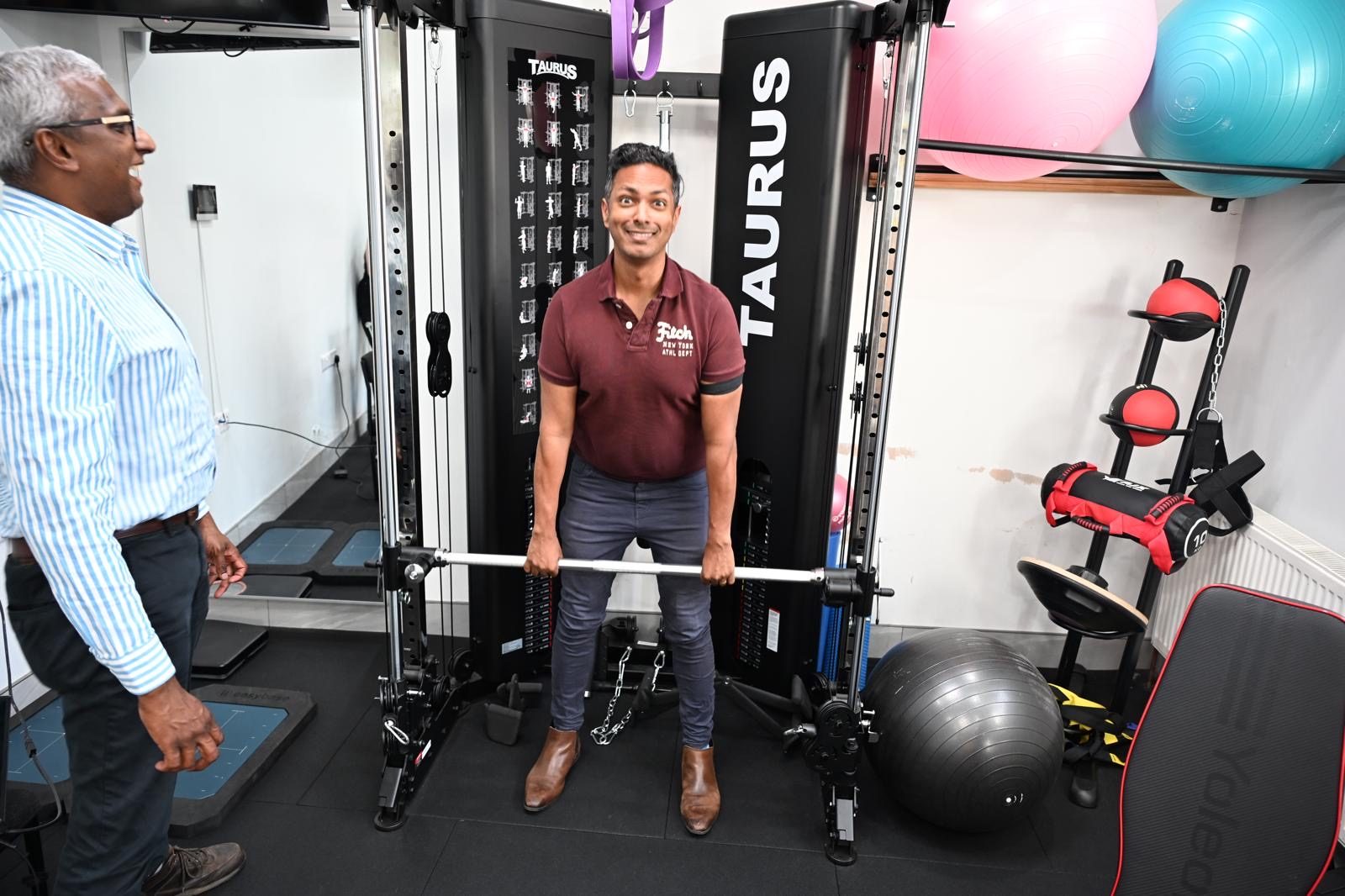
Rehabilitation is harder than most people expect, and I say that having tried it for myself. I believe in exercise as a treatment, both to settle symptoms and to help the body recover, and it is something I practise myself, so over the years I have spent time in the gym with different physiotherapists to learn what the exercises I ask of my patients really feel like, how demanding they are and how much patience they take.
It is harder still when life is busy. Many of my patients are working parents, or are looking after elderly parents, or have young children and a job and very little time left over, and they are tired and stressed before they even start. That is why the plan has to fit your real week, and why what you do between appointments matters as much as the appointments themselves. Your physiotherapist will guide you, but it is important to make the time to do the work on the days you are not seeing them, and for me that means getting to the gym.
Which exercises and nutrition do I recommend?
The exercises I recommend depend on your knee and on the stage you have reached, and I have set them out stage by stage on my knee exercises after injury or surgery page. What you eat matters as well, because muscle is built from protein and a body that is short of fuel recovers slowly, and my page on strength training and nutrition for knee health covers that in more detail. The knee surgery recovery kit page lists the simple equipment that helps at home. Please use all three alongside your physiotherapist's advice, and not instead of it.
How much protein do you need, and which foods have it?
Exercise is the signal to build muscle and protein is the material it is built from, so the two belong together, and most people are surprised by how little protein they are eating once they add it up. The standard UK figure for a healthy adult is 0.75g of protein for each kilogram of body weight a day, which is about 45g for a 60kg woman and 55g for a 75kg man, and that is a minimum for staying well, not a target for building muscle. For people over 65 the British Heart Foundation suggests 1g to 1.2g per kilogram, which is 75g to 90g a day for someone who weighs 75kg, and an international expert group on protein in older people advises 1.2g per kilogram or more for those who are exercising. A simple way to get there is to aim for 20g to 25g at each meal, and not to leave it all until the evening.
If you eat meat and fish this is not difficult, because cooked meat, poultry and fish are roughly a quarter to a third protein by weight. A grilled chicken breast, a salmon fillet or a tin of tuna will each give you about 25g or more, and cooked chicken pieces or prawns from the chiller aisle do the same job on the days when you have no time to cook.
If you are vegetarian, the foods to know are eggs, dairy, beans, lentils, tofu and nuts. An egg has about 7g, so two or three eggs make a meal. A 200ml glass of milk or soya drink has about 7g, a 30g piece of cheddar about 8g, half a tin of baked beans about 10g, and 100g of tofu or cooked lentils about 8g. A handful of nuts, or two tablespoons of peanut butter on wholegrain toast, adds around 10g more.
The one that surprises people most is yoghurt. A 150g serving of fat free Greek yoghurt has about 15g of protein and the same amount of skyr about 13.5g, which is nearly double the 8g in an ordinary low fat yoghurt, so swapping the pot you already buy is one of the easiest changes there is. Cottage cheese is another quiet one, at about 8g in a 60g serving.
Protein shakes are not essential, and most people can get enough from food. I do use them myself, because on a busy day a shake after the gym or with breakfast is a practical top up, and I would rather a patient had a shake than went without the protein. Choose one without much added sugar. Electrolyte tablets or powders in water are optional as well. They are worth having if you sweat heavily, train in the heat or simply find that they help you drink more, and plain water is fine for most gym sessions.
If you have kidney disease, please speak to your doctor before you increase your protein, because the advice is different for you. My page on strength training and nutrition for knee health covers all of this in more detail.


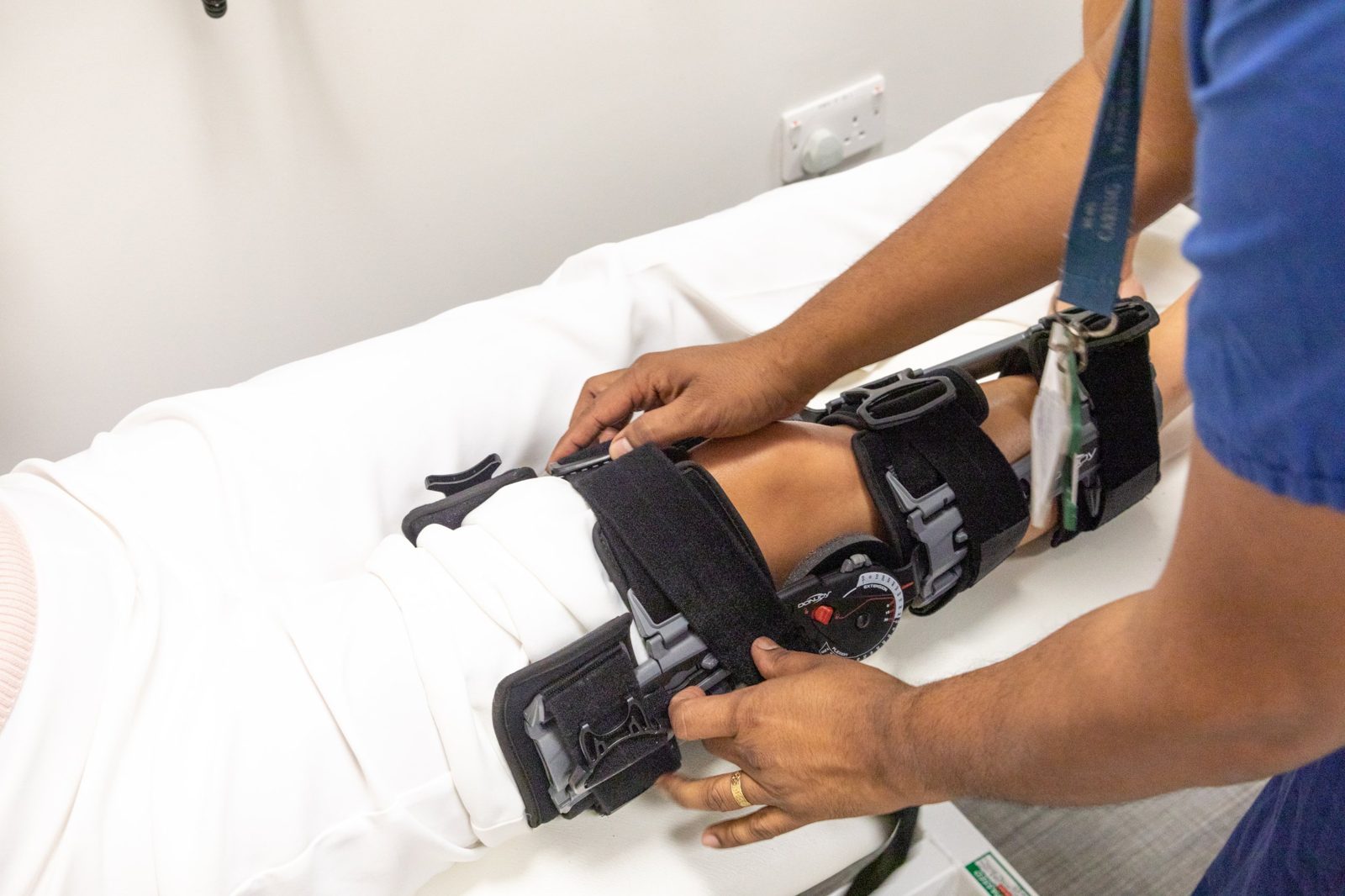
When does a knee or hip need a surgeon as well as a physiotherapist?
A knee needs a surgical opinion early when it is locked and will not straighten, when it keeps giving way on twisting after an injury, or when it has not improved after a proper spell of rehabilitation. A hot, swollen and very painful knee with a fever is different again, and needs A&E the same day.
Outside those situations, physiotherapy first is usually the right start. When an operation is the right answer, such as an ACL reconstruction for a knee that keeps giving way or a meniscus repair for a locked knee, it should be precise, modern and done at the right time, and it is the physiotherapy before and afterwards that makes it worth having. My knee surgery recovery kit page covers what you will need at home.
The same is true of hips. I see, diagnose and treat hip problems as well as knees, and most of them start with good physiotherapy in just the same way. A hip that has not improved after a proper spell of rehabilitation deserves a surgical opinion, and when an operation such as a hip replacement is the right answer for hip arthritis, the physiotherapy before and afterwards matters just as much as it does for a knee.
Who else can help with knee and hip pain?
Physiotherapists are the people I work with most often, but they are not the only ones, and a painful knee or hip is often best served by more than one kind of expertise. These are the other practitioners I refer to and take referrals from, with what each one does, how they qualify and where I find they are strongest. The right one for you depends on the problem you have and the stage you have reached.
Sport and exercise medicine doctor
A sport and exercise medicine doctor is a medically qualified doctor who specialises in diagnosing and treating muscle, tendon and joint problems without surgery, and in using exercise as a treatment in its own right. It has been a recognised medical specialty in the UK since 2005, and a consultant has completed medical school, foundation and core training and then four years of higher specialty training, which places them on the specialist register of the General Medical Council.
Their strength is diagnosis, particularly when the cause of the pain is not clear or when more than one thing is going on, and because they are doctors they can order scans and prescribe, and many perform ultrasound guided injections. I work with them most on tendon problems, on the sporting knee and hip, and on patients whose joint pain sits alongside other medical conditions.
You can read more about these doctors from the Faculty of Sport and Exercise Medicine UK and the British Association of Sport and Exercise Medicine.
Consultant physiotherapist
A consultant physiotherapist is a physiotherapist working at the most senior clinical level of the profession. In the NHS, consultant level practice builds on advanced practice, which is itself a master's level of training, and it spans four areas, which are clinical work, leadership, education and research. In practice that means a clinician who sees the complex cases, who may request scans, inject or prescribe if they hold those further qualifications, and who often leads a whole musculoskeletal service and trains the clinicians within it.
Their strength is depth of experience in treating joints without surgery, and many of the patients they send to me have already had a careful diagnosis and a proper course of rehabilitation, which makes the decision about surgery far clearer for both of us.
You can read more from the Chartered Society of Physiotherapy, and you can check that any physiotherapist is registered with the Health and Care Professions Council.
Osteopath
An osteopath assesses and treats the body with their hands, using movement, stretching and massage of the muscles and joints, usually with advice on exercise as well. 'Osteopath' is a title protected by law, so anyone using it must be registered with the General Osteopathic Council, and the training is a degree that usually takes four years full time and includes at least 1,000 hours of clinical training.
The philosophy is that the body works as a whole, so an osteopath will look at how the spine, pelvis and hips are moving even when it is the knee that hurts. Their strength is hands on assessment and treatment of stiffness and muscle tension, and I find it works best alongside an exercise programme, which is also what national guidance says for arthritis of the knee and hip, where manual therapy is recommended only alongside therapeutic exercise.
You can check that an osteopath is registered with the General Osteopathic Council, and read more about the profession from the Institute of Osteopathy.
Chiropractor
A chiropractor also treats with their hands, with a particular focus on the spine and on manipulation of the joints. 'Chiropractor' is a protected title too, and every chiropractor must hold a degree approved by the General Chiropractic Council and be registered with it.
Their strength is the spine, which matters to me because pain felt around the hip, in the buttock or even at the knee can be coming from the back, and a good chiropractor recognises when the hip or knee itself needs a scan or a surgical opinion. As with osteopathy, for a worn knee or hip I see the best results when hands on treatment is combined with strengthening work.
You can check that a chiropractor is registered with the General Chiropractic Council, and read more from the Royal College of Chiropractors and the British Chiropractic Association.
Sports rehabilitator
A graduate sport rehabilitator is a musculoskeletal practitioner trained through a degree accredited by the British Association of Sport Rehabilitators, which holds a register accredited by the Professional Standards Authority. Their whole training is built around exercise based rehabilitation, from the early days after an injury or operation through to a full return to sport.
Their strength is the later stages of recovery, where the work becomes running, jumping, changing direction and testing whether a knee is truly ready, and that is the stage at which the result of a ligament reconstruction is often decided.
You can read more, and check the register, at the British Association of Sport Rehabilitators.
Strength and conditioning coach
A strength and conditioning coach designs and coaches training programmes that build strength, power and fitness. It is not a regulated health profession, so the mark of quality I look for is accreditation with the UK Strength and Conditioning Association, which assesses a coach's knowledge and practical coaching and typically follows a degree and one to two years of work experience.
A coach does not diagnose or treat injuries, and the good ones are clear about that. Their strength is making people strong and keeping them strong, which is what protects joints over decades, and once a physiotherapist has taken a patient through rehabilitation, a coach is often the right person to carry that work on for the long term.
You can read more, and look for an accredited coach, at the UK Strength and Conditioning Association.
Sports scientist
A sport and exercise scientist applies physiology, biomechanics and psychology to how the body performs and adapts. The professional body in the UK is the Chartered Association of Sport and Exercise Sciences, formerly known as BASES, and its accreditation is the recognised standard, with accredited members eligible to become Chartered Scientists.
They measure things, such as the strength of one leg against the other, how you land from a jump, or your fitness on a bike or treadmill, and they turn those numbers into a plan. Their strength is objective testing, which takes the guesswork out of questions such as whether a leg is strong enough to return to sport or how hard someone can safely train.
You can read more from the Chartered Association of Sport and Exercise Sciences.
Musculoskeletal radiologist
A musculoskeletal radiologist is a medical doctor who specialises in imaging of the bones, joints, muscles and tendons. After medical school and foundation training they complete five years of specialty training in clinical radiology and the examinations for the Fellowship of the Royal College of Radiologists, with the final two years spent on a special interest such as musculoskeletal imaging.
They report the X-rays, MRI, CT and ultrasound scans that the rest of us rely on, and many also perform image guided injections into joints and around tendons. Their strength is accuracy, because a precise report often decides whether a knee or hip needs rehabilitation, an injection or an operation, and I discuss difficult scans with them directly.
You can read more from the Royal College of Radiologists and the British Society of Skeletal Radiologists.
I tend to work with all of the above, because no single profession, including my own, has every answer for a knee or a hip, and what matters most is that you see the right person at the right time.
Can you keep your own physiotherapist?
Yes. If you already have a physiotherapist you trust, please keep them, and I am always happy to share the diagnosis and the plan with them so that we are working towards the same thing.
This page is not a ranking and it is not a complete list. There are many very good physiotherapists in London whose work I have not yet seen, and these are simply the colleagues I know and work with. I have no financial relationship with any of the physiotherapists or practices listed here.
Need an opinion on your knee or hip?
A consultation will tell you whether your knee or hip needs physiotherapy, an injection or an operation, and in what order.
Knee and Hip Physiotherapy Questions
A physiotherapist is a registered health professional who helps people affected by injury, illness or disability through movement and exercise, hands on treatment, education and advice. For a knee or hip that means assessing how the joint moves and how strong the muscles around it are, working out what is driving the pain, and then building a programme to change it.
'Physiotherapist' is a title protected by law. To use it, a clinician must complete an approved degree in physiotherapy and register with the Health and Care Professions Council, and most are also members of the Chartered Society of Physiotherapy. Many go on to further training, in some cases to master's level, and with additional qualifications some can request scans, inject joints and prescribe medicines.
A physiotherapist starts by working out why the joint hurts, then builds strength in the muscles that support it, restores movement, and guides a gradual return to walking, work and sport. For arthritis that usually means strengthening and fitness work that reduces pain and improves function. For injuries such as a ligament or meniscus tear it means a staged programme, whether or not an operation is needed, and after surgery it is the physiotherapy that turns a good operation into a good result.
Yes, I believe it does, and I have seen it change knees and hips that patients had almost given up on. It is also fair to be honest about what the research shows, because the best physiotherapists I know are honest about it too. NICE recommends therapeutic exercise as a core treatment for everyone with osteoarthritis. The largest review of the trials for the knee, a 2024 Cochrane review of 139 trials and more than 12,000 people, found that exercise probably improves pain, function and quality of life, with an average benefit that was real but modest, and the 2026 review for the hip found a smaller average benefit again. An average hides a great deal though, because it includes people who managed very little alongside people who trained properly for months, and in my experience the patients who commit to it tend to do better than the average suggests. For injuries the picture is encouraging too. In a Dutch trial of 321 people aged 45 to 70 with a meniscal tear and a knee that was not locking, physiotherapy was not inferior to keyhole surgery over two years, and in a Swedish trial of 121 young adults with a torn anterior cruciate ligament, those who began with rehabilitation and had surgery only if they needed it did as well at five years as those operated on early, with about half never having the operation. The reviews did not find one type of exercise clearly better than another, so what follows is my opinion and not a trial result. I think the most valuable thing most people can do is build muscle with resistance training, ideally in a gym, where the load can be increased steadily and safely. If you cannot get to a gym then resistance bands at home are a good place to start, but I really do recommend the gym at least once a week. Physiotherapy does not fix everything, and some knees and hips do need an operation, which is exactly why I want your physiotherapist and me working together.
Physiotherapy is an active process. The sessions are where you are assessed, taught and progressed, but the change happens in the work you do between them, and for me that work belongs in the gym. Once a week is the minimum and, done properly, in my experience once a week is enough to make a real difference. Twice a week is ideal for the lower body, but I would much rather you went once a week for the rest of your life than three or four times a week for two or three months and then never again. It works like putting a small amount of money away regularly, where the gains compound over the years simply because you kept going. I know how hard that is with a job, children or parents to look after, because I live it too, and I still lose two or three weeks at a time when work and family life get busy. What matters is that I go back, and that is all I ask of my patients. Some discomfort when you start is normal, and national guidance is clear that it settles and that continuing is good for the joint. It also works best alongside other things, which means eating enough protein, sleeping well, keeping to a healthy weight, and telling your physiotherapist honestly what you have and have not managed so that the plan fits your life.
There is no single best knee or hip physiotherapist in London. The right one for you is someone who examines you properly, gives you a plan that progresses as you get stronger, and is close enough that you will actually go. The practices on this page are the ones I know and work with across west and central London.
For most knee pain, seeing a physiotherapist first is the right start. See a knee surgeon early if the knee is locked, cannot be straightened or keeps giving way after an injury, and go to A&E the same day if the knee is hot, swollen and very painful and you have a fever.
Yes. The NICE guideline on osteoarthritis recommends therapeutic exercise, such as muscle strengthening and general aerobic fitness, for everyone with the condition, and stronger thigh and hip muscles take some of the load that would otherwise pass through the joint.
Yes, almost always. The operation repairs or replaces the structure, and physiotherapy is what brings back the movement, the strength and the confidence in the leg, so it is worth choosing your physiotherapist before the operation and not after it.
No. You can contact any of these practices directly. If you are using private medical insurance, check with your insurer first, because some ask for a referral from a GP or a consultant before they will cover physiotherapy.
You can book online, call 0207 859 4016 or email admin@ortholongevity.co.uk. I see patients at Lanserhof at The Arts Club in Mayfair and at Cromwell Hospital in Kensington.
References
- National Institute for Health and Care Excellence. Osteoarthritis in over 16s: diagnosis and management. NICE guideline NG226. 2022. nice.org.uk/guidance/ng226
- Department for Business and Trade. Regulated Professions Register: Chartered physiotherapist. regulated-professions.service.gov.uk
- Chartered Society of Physiotherapy. Injection therapy for physiotherapists. csp.org.uk
- Lawford BJ, Hall M, Hinman RS, et al. Exercise for osteoarthritis of the knee. Cochrane Database of Systematic Reviews 2024;12:CD004376. doi:10.1002/14651858.CD004376.pub4
- Hall M, Lawford BJ, Hinman RS, et al. Exercise for osteoarthritis of the hip. Cochrane Database of Systematic Reviews 2026;7:CD007912. doi:10.1002/14651858.CD007912.pub3
- van de Graaf VA, Noorduyn JCA, Willigenburg NW, et al. Effect of early surgery vs physical therapy on knee function among patients with nonobstructive meniscal tears: the ESCAPE randomized clinical trial. JAMA 2018;320(13):1328 to 1337. doi:10.1001/jama.2018.13308
- Frobell RB, Roos HP, Roos EM, et al. Treatment for acute anterior cruciate ligament tear: five year outcome of randomised trial. BMJ 2013;346:f232. doi:10.1136/bmj.f232
- General Osteopathic Council. Becoming an osteopath.
- General Chiropractic Council. What we do.
- Faculty of Sport and Exercise Medicine UK. Training pathways.
- Chartered Society of Physiotherapy. England consultant physiotherapists.
- British Association of Sport Rehabilitators. BASRaT.
- UK Strength and Conditioning Association. Accredited S&C Coach.
- Chartered Association of Sport and Exercise Sciences. Sport and Exercise Scientist Accreditation.
- General Medical Council. Clinical radiology curriculum.
- British Heart Foundation. Protein: how much do you need?
- British Nutrition Foundation. Protein in the diet, 2021.
- Bauer J, Biolo G, Cederholm T, et al. Evidence based recommendations for optimal dietary protein intake in older people: a position paper from the PROT-AGE Study Group. Journal of the American Medical Directors Association 2013;14(8):542 to 559. doi:10.1016/j.jamda.2013.05.021
Patient Reviews
What Our Patients Say
Verified Doctify reviews from patients who have received treatment for knee problems under the care of Dr Arj Imbuldeniya at OrthoLongevity.