
Request an appointment
Reserve your spot with our team in just minutes.
Other Knee Treatments
Clicking, Grinding and Popping Knee: Causes and Treatment
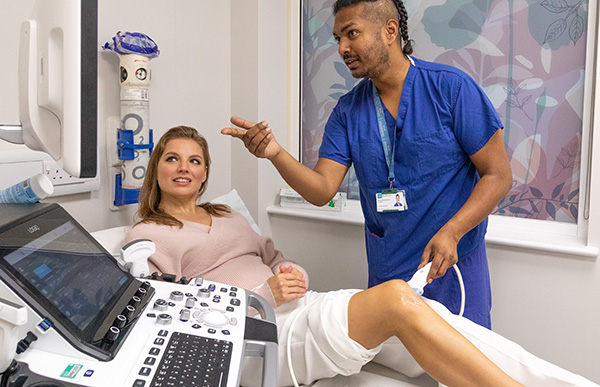
A knee that clicks, grinds or pops is usually making mechanical noise, not falling apart. Painless clicking and the fine grinding of the kneecap are extremely common and rarely need treatment. Noise that comes with pain, swelling, catching or the knee giving way is the kind worth investigating. The presence or absence of those symptoms, not the noise itself, is what matters.
Why does my knee click, grind or pop?
Knees are noisy joints, and most of the sounds are harmless. A sharp click or pop is often a tendon or ligament flicking over a bony ridge, or a tiny bubble of gas releasing inside the joint, the same thing that makes knuckles crack. A fine grinding or crunching under the kneecap, called crepitus, is usually the cartilage surfaces gliding over each other with a little more friction than they once had. On its own, none of this means the joint is wearing out. A healthy knee can click and grind all day.
When is a noisy knee nothing to worry about?
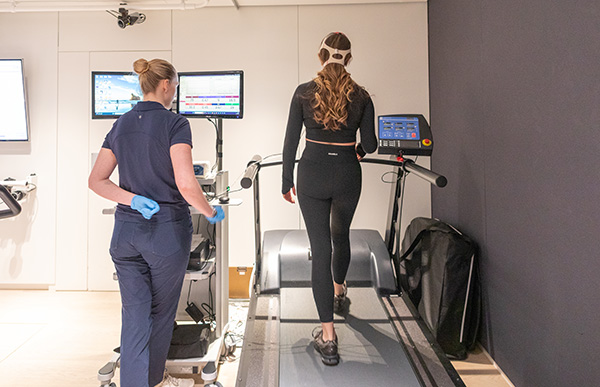
If your knee makes noise but does not hurt, does not swell, does not catch and does not give way, it almost never needs treatment. Painless noise is a mechanical quirk, not a diagnosis, and chasing it with scans and procedures does more harm than the noise ever would. Where crepitus bothers you, the answer is rarely the joint and almost always the muscles and movement around it, rebuilt so the kneecap tracks and loads better. Unglamorous, and usually enough.
When a clicking or grinding knee needs a proper look
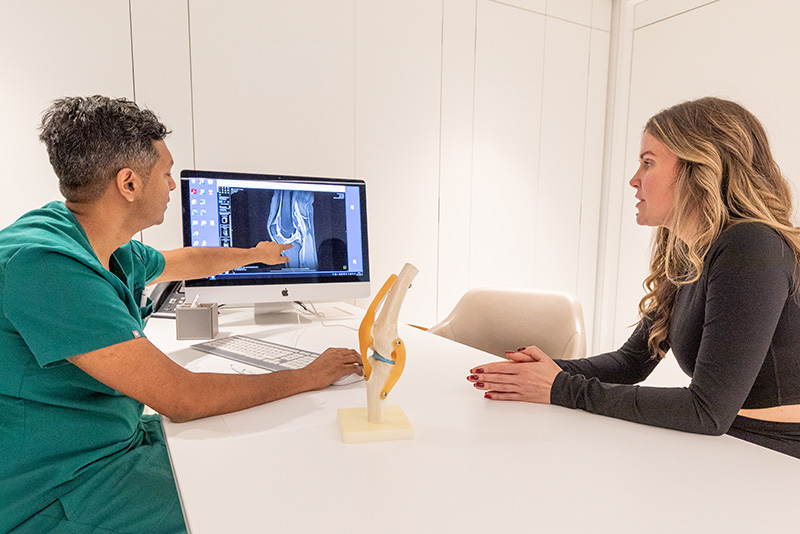
Noise that travels with symptoms is the noise to take seriously. A click or clunk that comes with pain, swelling, a catching or locking sensation, or a feeling that the knee might give way can point to a meniscus tear, a loose fragment of cartilage or a kneecap that is not tracking properly. Here I would examine the knee and, where the story fits, arrange a scan to look inside rather than guess. This is the two-sided failure I see constantly: harmless clicks sent for surgery they never needed, and genuinely torn knees dismissed as harmless noise for years. The job is to know which is which.
At a Glance
How I treat a clicking or grinding knee
Treatment follows the cause, not the sound. For harmless crepitus or a painless click, the plan is reassurance and, where it bothers you, targeted work to improve how the kneecap tracks and how the muscles support the joint. Where a scan shows a genuine cause such as a meniscus tear or a loose body, the plan is built around that finding and may, in the right and carefully selected patient, involve keyhole surgery. No two knees leave with the same plan, because no two people arrive with the same joint, the same activities or the same life to fit recovery around. That is deliberate, not incidental.
Should I worry about a grinding knee as I get older?
Some increase in knee noise with age is normal and, by itself, not a sign that a replacement is coming. Crepitus becomes more common as the cartilage surfaces mature, in the same way skin and hair change, and most people who notice it will never need surgery. What decides your knee’s future is not the noise but how the joint is loaded and how strong the muscles around it are, both of which you can influence. If you take one sentence from this page, take this one: treat the symptoms, not the sound.
Start with your knee's biological age
If you are unsure where your knee sits on this spectrum, here is the practical place to start. The Knee Age quiz takes sixty seconds, scores the factors that drive knee ageing, and tells you your knee's biological age against the age on your passport. It costs nothing, and it turns a vague worry into something you can act on.
Frequently Asked Questions
Usually not. A knee that clicks or grinds without pain, swelling, catching or giving way is almost always making harmless mechanical noise and needs no treatment. It is worth investigating only when the noise comes with those symptoms.
The fine grinding under the kneecap, called crepitus, is usually the cartilage surfaces gliding with a little more friction than before. On its own it does not mean the joint is wearing out, and a healthy knee can grind.
See someone if the noise comes with pain, swelling, a catching or locking sensation, or a feeling the knee might give way. Those features can point to a meniscus tear or loose cartilage that benefits from assessment.
Not by itself. Painless clicking and grinding are common at any age and are not proof of arthritis. Arthritis is diagnosed on the whole picture of symptoms and examination, not on knee noise alone.
Almost always. Harmless noise needs no treatment, and where it bothers you the answer is usually improving how the kneecap tracks and how the muscles support the knee. Surgery is reserved for a genuine structural cause shown on a scan.
Generally no. Some increase in knee noise with age is normal and not a sign a replacement is coming. What matters is how the joint is loaded and how strong the surrounding muscles are. You can discuss yours on 0207 859 4016 or at admin@ortholongevity.co.uk.
Why Choose OrthoLongevity?
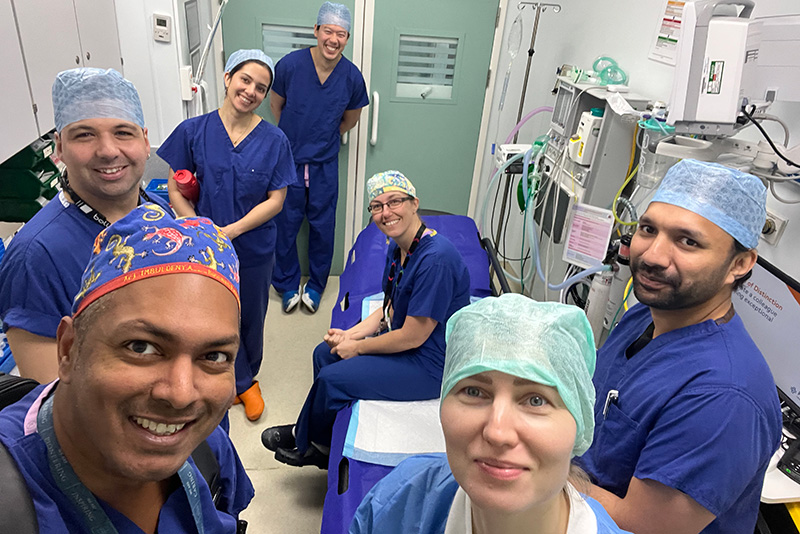
At OrthoLongevity, we deliver care built on innovation, compassion and clinical excellence. Led by Dr Arj Imbuldeniya, our clinic uses advanced therapies within our holistic Ortholongevity™ approach to help patients regain mobility and improve their quality of life. With access to the latest technologies and a dedicated, compassionate team, we focus on finding the right treatment for every individual.
Patient Reviews
What Our Patients Say
Verified Doctify reviews from patients treated by Dr Arj Imbuldeniya at OrthoLongevity.