
Knee and hip surgery questions answered
Knee & Hip Treatment FAQs
This page brings together answers to the most common knee and hip surgery questions we’re asked by patients before and during their care at OrthoLongevity.
If you can’t find what you’re looking for here, our team is always happy to help.
General Knee and Hip Questions
Knee and hip pain can have many causes, including arthritis, tendon or ligament injuries, cartilage damage, muscle imbalance, or changes related to ageing or activity. An accurate diagnosis is essential to determine the most appropriate treatment.
Yes. Problems in one joint can affect the way you move, placing additional strain on other joints. It’s common for knee and hip pain to occur together, particularly when biomechanics or gait are altered.
Knee and hip conditions are assessed and treated by orthopaedic specialists. At our clinic, all care is led by a Consultant Knee & Hip Surgeon, supported by physiotherapists and rehabilitation specialists.
You may benefit from specialist assessment if your pain is persistent, worsening, affecting daily activities, or not improving with rest, physiotherapy, or medication.
Absolutely. Surgery is never the default. We prioritise conservative and joint-preserving treatments wherever appropriate and only recommend surgery when non-surgical options have been fully explored.
Sudden knee and hip pain is often an injury to the soft structires between the bones called cartilage, meniscus and labrum. In younger adults this is often associated with an injury playing sport or doing an activity. In older adults these pains can often start without an obvious cause.
Booking Into One Of Our Clinics
No. You can self-refer directly to OrthoLongevity.
You can book by contacting our team directly or via the online enquiry and booking options on the website.
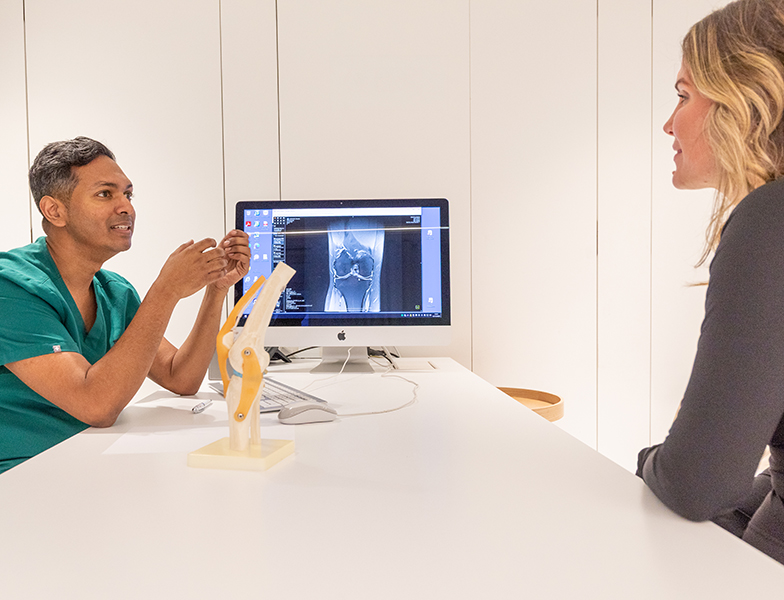
Your first appointment includes a detailed discussion of your symptoms, a clinical examination, and review of any existing imaging. Your consultant will explain your diagnosis and outline appropriate treatment options.
Yes. Bringing previous MRI scans, X-rays, or reports can be very helpful and may reduce the need for repeat investigations.
In most cases, scan results are discussed promptly, either at your consultation or shortly afterwards, once imaging has been reviewed by your consultant.
In some circumstances this may be possible, but a clinical assessment is usually recommended to ensure the correct imaging is requested and interpreted accurately.
Treatment and Ongoing Care
Injections are arranged following consultation and assessment. Your consultant will explain whether an injection is suitable for your condition and talk you through the process.
If appropriate, your consultant can advise on pain management and prescribe medication as part of your treatment plan.
Yes. With your consent, we routinely share clinic letters and treatment plans with your GP, physiotherapist, or other healthcare professionals involved in your care.
We provide clear written summaries and use secure communication systems to ensure you stay informed throughout your treatment.
Practical Information
Appointments and treatments are delivered across Central and West London locations, including Lanserhof Mayfair.
Your care is led by Consultant Orthopaedic Surgeon Dr Arj Imbuldeniya, supported by an experienced multidisciplinary team.
Looking for More Information?
- For questions about fees, self-pay options or insurance, visit Paying for Your Care.
- For detailed information on what happens before, during and after treatment or surgery, visit Your Patient Journey, A Guide for Patients.
If you still have questions or would like to speak to our team, please get in touch. We’re here to help.
Clinical Feedback
Our latest reviews
See what our patients say about their experiences and how our knee and hip care helped them regain their mobility