

Request an appointment
Reserve your spot with our team in just minutes.
Other Knee Treatments
Private Knee Keyhole Surgery in London
A Minimally Invasive Solution for Knee Pain and Injury
Keyhole knee surgery — also known as knee arthroscopy — is a minimally invasive, day-case procedure used to diagnose and treat a range of knee problems. By using small incisions, a high-definition camera and precision instruments, this approach provides effective relief with faster recovery times than traditional open surgery.
What Is Arthroscopic Knee Surgery?
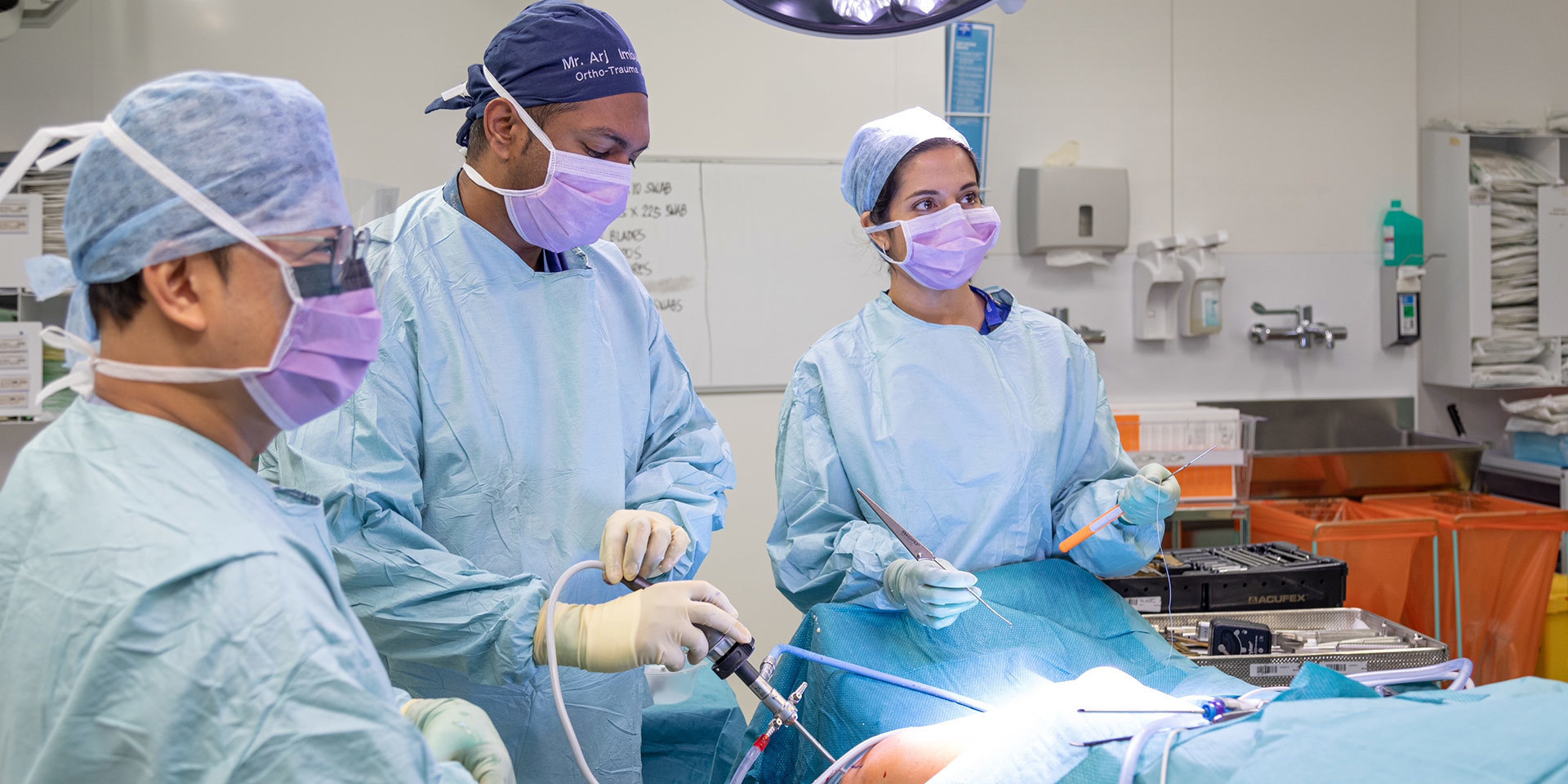
Arthroscopic (keyhole) knee surgery involves inserting a small camera, called an arthroscope, into the knee joint through tiny incisions. The surgeon can then view detailed images on a 4K HD monitor and treat damaged tissue using fine surgical tools.
This approach enables the surgeon to accurately address internal joint issues while minimising disruption to surrounding tissues. For most patients, it’s a safe and efficient alternative to open knee surgery, offering reduced pain, scarring, and downtime.
How Keyhole Knee Surgery Works
Keyhole knee surgery works by allowing the surgeon to see and treat problems inside the knee joint without the need for a large incision. Through two or three small openings, a high-definition arthroscope is inserted into the joint. This camera transmits detailed images to a monitor, giving a clear view of cartilage, ligaments, meniscus tissue and the joint lining.
Specialised instruments are then used to repair, trim or remove damaged tissue with precision. Because the surrounding muscles and structures are not cut open, tissue trauma is minimised. This typically results in less postoperative pain, reduced swelling and a faster return to movement compared with traditional open surgery.
Where appropriate, keyhole surgery may also form part of a wider Ortholongevity™ approach, focused on restoring joint function, preserving cartilage and supporting long-term knee health.
Who Can Benefit from Keyhole Knee Surgery?
Patients suffering from persistent knee pain, stiffness, or swelling due to injuries or degenerative conditions such as osteoarthritis may benefit from knee arthroscopy.
Keyhole surgery is particularly effective for conditions affecting:
- Meniscus tears (including body and root tears)
- Cartilage damage and loose fragments
- Hoffa’s fat pad impingement
- Synovial inflammation or scar tissue build-up
- Ligament injuries, including the ACL
Your suitability will be determined after a detailed consultation and imaging review by your orthopaedic surgeon.
How Keyhole Surgery Helps
Benefits of Private Knee Keyhole Surgery
-
Smaller incisions and minimal scarring Reduces tissue trauma and improves cosmetic results.
-
Less postoperative pain Local anaesthetic and lubricating injections help manage discomfort.
-
Faster recovery Most patients walk the same day and return to daily activities within weeks.
-
Day-case procedure No overnight hospital stay is typically required.
-
Reduced risk of infection Modern minimally invasive techniques enhance safety and healing.
A Faster Path to Recovery and Function
Keyhole surgery combines advanced imaging, precision instruments, and consultant expertise to deliver excellent outcomes with less downtime. At The West London Knee and Hip Clinic, Dr Arjuna Imbuldeniya performs all procedures using evidence-based techniques and meticulous care — helping patients return to pain-free movement and restore confidence in their joint health.
Key Information About Private Knee Keyhole Surgery in London
Small incisions are made around the knee, and sterile fluid is introduced to improve visibility. The arthroscope allows the surgeon to assess the cartilage, ligaments, and other joint structures. Fine instruments are then used to treat damage, remove loose fragments, or smooth cartilage surfaces. The procedure typically lasts 15–60 minutes.
Most procedures are performed under general anaesthetic, although local anaesthetic may be suitable for simpler cases. Before closure, local anaesthetic, hyaluronic acid lubricant, and painkillers are injected into the knee to minimise postoperative discomfort.
Most patients return home the same day. Expect mild swelling or stiffness for a few days. Keep waterproof dressings dry for 2 weeks until stitches are removed. Use ice, rest, and NSAIDs as directed. Physiotherapy begins soon after to rebuild strength and mobility.
Light activities typically resume within a few weeks; higher-impact exercise or sport may take several months depending on the procedure. Your physiotherapy team will guide each stage of recovery.
Potential Risks and Complications
Knee arthroscopy is considered safe, with complications occurring in around 1% of cases. Possible risks include temporary swelling or bruising, stiffness, infection, nerve irritation, or deep vein thrombosis (DVT). All risks will be discussed in detail during your consultation so you can make an informed decision.
What to Expect from Your Keyhole Knee Surgery
Every stage of your treatment is designed for safety, precision, and comfort.
-
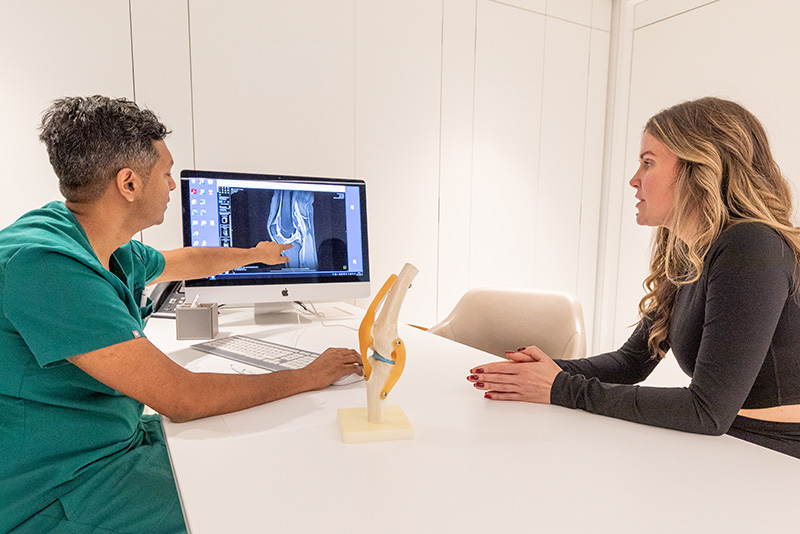
Initial Consultation Your journey starts with a detailed assessment by Dr Arjuna Imbuldeniya, who will discuss your symptoms, review imaging, and determine whether arthroscopy is appropriate. Non-surgical options are always considered first. -

Tests and Assessment Imaging such as MRI or X-ray helps identify damage to cartilage, ligaments, or meniscus tissue. A personalised surgical plan will then be created. -

The Procedure The surgery is performed as a day case under anaesthetic. Two or three small incisions are made to insert the arthroscope and instruments. The joint is cleaned with sterile fluid to remove debris, and necessary repairs are made. At the end, local anaesthetic, hyaluronic acid, and pain medication are injected to support recovery. Patients typically walk out of hospital the same day.

Patient stories
Real feedback from our patients
Read feedback from patients who have undergone private keyhole knee surgery at The West London Knee & Hip Clinic.
Arthroscopic knee surgery success
Dear Mr. Imbuldeniya, I wanted to extend my sincere thanks for the care and expertise you provided throughout my arthroscopic knee surgery and recovery.
Patient
Keyhole surgery outcome
Dr. Imbuldeniya’s skill as a knee surgeon is evident in the precision of his work and the smooth recovery I’ve experienced.
Olga Singh
Book Your Consultation
If you’re suffering from knee pain, stiffness or locking and want to explore private knee keyhole surgery in London, book a consultation with Dr Arjuna Imbuldeniya at The West London Knee and Hip Clinic. Our team will assess your symptoms, explain your options, and create a tailored treatment plan to help you regain strength, mobility and comfort.
Frequently Asked Questions
Many patients considering robotic-assisted surgery want to understand what to expect before treatment. Here are some of the most common questions we’re asked in clinic:
Discomfort is minimal. Local anaesthetic is used at the end of the procedure, and pain relief will be prescribed as needed.
Most patients can bear weight and walk carefully the same day, often using crutches for short-term comfort.
Depending on the procedure and your recovery progress, low-impact activity can begin after 4–6 weeks. High-impact sports may take up to 3–4 months.
Mild swelling is normal and should improve with rest, ice, and elevation. Persistent swelling or pain should be reported to your care team.
Why Choose The West London Knee and Hip Clinic?
At The West London Knee and Hip Clinic, we deliver care built on innovation, compassion and clinical excellence. Led by Mr Arjuna Imbuldeniya, our clinic uses advanced therapies within our holistic Ortholongevity™ approach to help patients regain mobility and improve their quality of life. With access to the latest technologies and a dedicated, compassionate team, we focus on finding the right treatment for every individual.
Patient Reviews
What Our Patients Say
Verified Doctify reviews from patients treated with keyhole knee surgery at our London clinic.