
Request an appointment
Reserve your spot with our team in just minutes.
Other Hip Treatments
Hip Arthritis Treatment in London
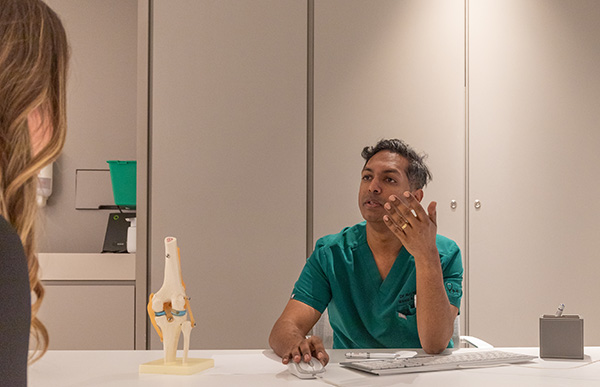
Hip arthritis treatment in London with Dr Arj Imbuldeniya, consultant hip surgeon. Treatment ranges from strength and lifestyle programmes through ultrasound-guided injections, including high-dose PRP and hyaluronic acid, to muscle-sparing Röttinger hip replacement, sequenced in the right order for your hip. Most patients treated this way do not need surgery.
The quietest joint in the body, until it is not
The hip announces itself late. It is the deepest joint in the body, buried under the strongest muscles you own, and by the time it starts speaking most people have been compensating for years without knowing it. The stride shortens. The sock goes on with a grunt. The golf swing loses its turn. Patients rarely come to me saying their hip hurts; they come saying their groin pulls, their thigh aches, their knee hurts, or they have simply slowed down, and nobody has told them these are all the same story.
By the time they reach my clinic, most have also been handed one of two plans. Either they have been told to come back when it is bad enough to replace, while the joint stiffens and the muscles around it quietly waste. Or they have been listed for a replacement before anyone tried seriously to help them keep their own hip. I have watched both plans cost people years of good movement, and they fail for the same reason: nobody was accountable for the whole pathway. I am a consultant hip surgeon, I replace hips every week, and I spend most of my clinics helping people keep their own. That combination is the point. The decision to strengthen, to inject or to operate should sit with someone who can offer all three.
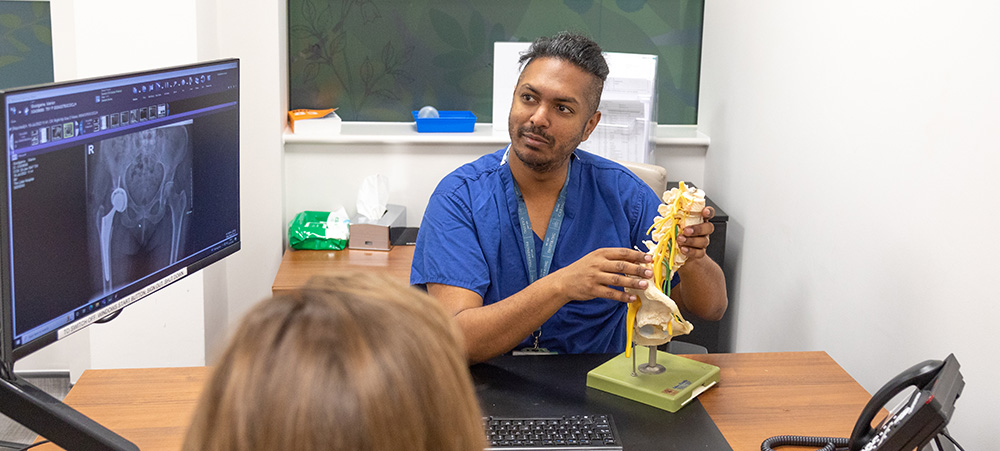
What is hip osteoarthritis?
Hip osteoarthritis is a progressive condition in which the cartilage lining the ball-and-socket joint thins, the bone reacts, the joint capsule stiffens and the muscles around the hip weaken. It is the most common cause of hip and groin pain from middle age onwards, and it is not simply wear and tear: genetics, the shape of the joint you were born with, previous injury, body weight and muscle strength all set the speed at which it runs.
That last point is the one to hold on to. You cannot change the hip you inherited, but almost everything else on that list is changeable, and changing it changes the pace of the disease. Two people with the same X-ray can be living two entirely different lives, one still playing tennis, the other planning their days around a painkiller. The X-ray is not the verdict. It never is.
Symptoms of hip arthritis
The common symptoms of hip arthritis are pain in the groin or deep in the buttock, an ache that spreads down the front of the thigh sometimes as far as the knee, stiffness after sitting, difficulty with socks and shoes, a shortening stride, and in later stages pain that wakes you at night.
The earliest sign is usually not pain at all but lost rotation: the foot that no longer turns out at the barber's basin, the leg that will not cross, the low car seat that has become a negotiation. If any of this is familiar, the time to be assessed is now, while the muscles are still strong and every option remains on the table.
At a Glance
Hip arthritis treatment without surgery
Effective non-surgical treatment for hip arthritis is built on strength and biology first, with ultrasound-guided injections added where they are needed. This is where most of my patients spend most of their time, and it is where most replacements are avoided or deferred by years. We do the right things in the right order.
Strength comes first because the hip is unusually well defended when its muscles are working. The gluteal muscles are the joint's suspension system, and rebuilding them takes load off the worn surface with every single step, several thousand times a day. Alongside strength sits biology: body composition, metabolic health, nutrition and sleep set the level of inflammation the joint lives in, and improving them is treatment, not lifestyle advice. For the lateral hip pain that often travels with arthritis, and for gluteal tendon problems in their own right, the same principles apply and are covered on my hip pain pages.
And none of it comes off a shelf. No two patients with hip arthritis are the same, so no two treatment pathways I write are the same either. Your weight, your wider health, your anatomy, your family history, what you eat, how you sleep, how you feel in yourself and what your days actually demand of you all shape the plan, which is why it is built around you and your own goals rather than around a standard pathway. I am also realistic about the world the plan has to survive in, the children, the caring, the work that will not wait. I juggle the same things myself, and I was not always someone who prioritised his own health, so I write plans for real lives, not ideal ones.
Hip arthritis injections: which one, and when
Injections for hip arthritis include steroid, hyaluronic acid and high-dose PRP, and because the hip is a deep joint every one of them should be delivered under real-time imaging. I perform every hip injection under ultrasound guidance, so the treatment reaches the joint itself rather than the tissue around it.
A steroid injection settles a painful flare quickly and is also a useful diagnostic tool in a joint this deep: if it relieves the pain, we have confirmed where the pain lives. Hyaluronic acid supplements the joint's lubrication and can improve comfort for months in the right patient. High-dose PRP uses a concentrated preparation of your own platelets, prepared on the Arthrex ACP Max system from a 90ml blood draw, to deliver a far higher total platelet dose than standard PRP. For carefully selected patients I also offer bone marrow aspirate concentrate at Cromwell Hospital, with the same honesty I apply to every biological treatment: nothing injected into a hip regrows cartilage, and anyone promising otherwise is selling the story rather than the science.
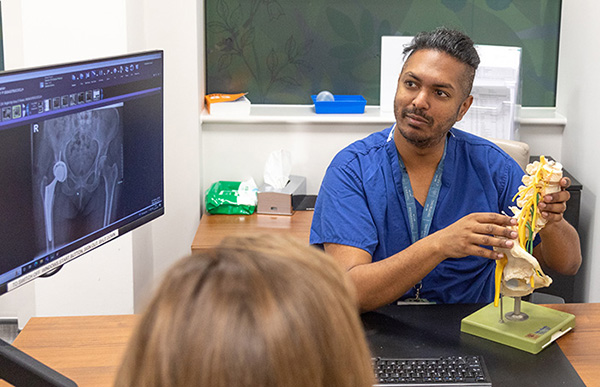
When hip replacement is the right answer
Some hips need replacing, and recognising that moment matters as much as avoiding the operations that are not needed. A hip that has worn beyond the reach of biology does not improve with waiting. It takes the gluteal muscles, the other hip, the spine and your fitness down with it, and it makes the eventual operation harder to recover from. Delaying a genuinely necessary hip replacement is not preservation; it is slow surrender.
When the moment comes, the operation I use for suitable patients is the Röttinger muscle-sparing anterior approach, which reaches the joint between the muscles rather than through them. That page sets out the approach, the evidence and my own patients' recovery in full, including what it means for younger patients who need the implant to last decades. Hip replacement done at the right time, for the right reasons, is one of the most successful operations in all of surgery, and I would far rather you had it a year early than five years late.
I am selective about surgery, not reluctant. If your hip has reached the point where a replacement will give you more than everything else combined, I will tell you plainly in the first consultation, and I will be the surgeon who performs it.
Frequently Asked Questions
No, hip arthritis cannot be cured, and I would be cautious of anyone who says otherwise. What it can be is slowed, managed and, when the time truly comes, definitively treated with a replacement that works. The aim before that point is a hip that lets you live at full width: sport, travel, grandchildren, all of it.
There is no single best treatment for hip arthritis; there is a right order. Gluteal strength and biological health first, because they help every hip at every stage. Image-guided injections where symptoms need more. Replacement when the joint is truly worn, or when delay would cost you more than surgery. The assessment matters more than any single therapy, because the right treatment for one hip is the wrong one for another.
The most reliable way to avoid a hip replacement is to act early: build gluteal strength, address weight and metabolic health, and use the right injection at the right stage rather than waiting until the joint is beyond helping. Many people with hip arthritis never need surgery. And if yours is the hip that does, avoiding it past the right moment is the one strategy I would talk you out of.
Very often, yes. True hip joint pain is usually felt in the groin or deep in the buttock, not on the outside of the hip, and it frequently travels down the thigh toward the knee, which is why hip arthritis is so often chased as a knee problem first. A proper examination and the right imaging settle the question quickly.
Yes. Even in bone on bone arthritis, properly structured strength work is safe, effective and improves the outcome of any future surgery. The muscles you build before an operation are the muscles you recover with after it.
Usually within days, at Lanserhof at The Arts Club in Mayfair or at my clinics across London. You can book an appointment online, call my team on 0207 859 4016, or email admin@ortholongevity.co.uk.
Why Choose OrthoLongevity?
At OrthoLongevity, we deliver care built on innovation, compassion and clinical excellence. Led by Dr Arj Imbuldeniya, our clinic uses advanced therapies within our holistic Ortholongevity™ approach to help patients regain mobility and improve their quality of life. With access to the latest technologies and a dedicated, compassionate team, we focus on finding the right treatment for every individual.
Patient Reviews
What Our Patients Say
Verified Doctify reviews from patients treated by Dr Arj Imbuldeniya at OrthoLongevity.