
Request an appointment
Reserve your spot with our team in just minutes.
Other Knee Treatments
Knee Giving Way: Causes and Treatment in London
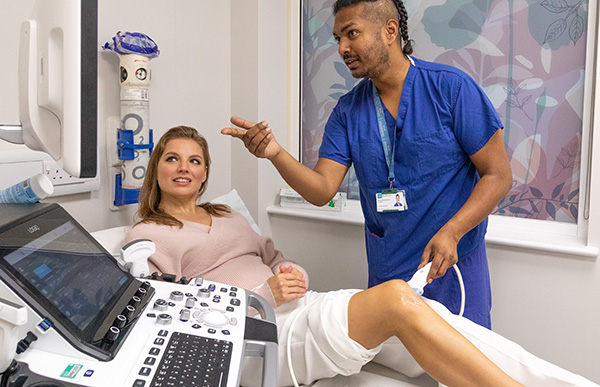
A knee that gives way or buckles is trying to tell you something, and it is worth listening. Sometimes it is the muscles switching off for a moment because of pain or weakness. Sometimes it is a genuine mechanical problem such as a ligament, a meniscus or a kneecap that is not stable. The cause decides the treatment, and most causes are very treatable. The first step is finding out which one it is.
Why does my knee give way?
A knee gives way for one of two broad reasons. The first is that the muscles briefly stop supporting it, usually because pain or arthritis makes the thigh muscle switch off for a fraction of a second, so the knee buckles even though the structures are intact. The second is a genuine mechanical instability: a torn ligament such as the ACL, a meniscus fragment catching in the joint, or a kneecap that slips out of its groove. These feel similar in the moment but need very different treatment, which is why the story of how and when it happens matters so much.
The common causes of a knee giving way
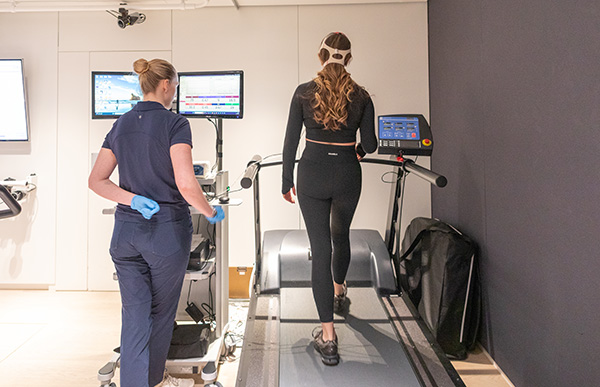
Most instability comes down to a handful of causes. Ligament injury, particularly of the ACL, produces a knee that gives way when you turn or pivot. A meniscus tear can catch and buckle the knee, often with a click or a locking sensation. Kneecap instability makes the knee give way when the kneecap slips, usually with a sense of the knee going sideways. And arthritis or plain muscle weakness produces a knee that gives way from the muscles letting go rather than the structures failing. Each has its own pattern, and the pattern is the clue.
When knee instability needs to be seen
A knee that gives way and then swells, locks or will not straighten deserves a proper assessment rather than reassurance, because those features point to a structural cause inside the joint. Repeated giving way when you pivot or change direction, especially in someone active, is the classic story of an ACL problem and should be examined. Giving way that leaves you falling or unable to trust the leg is worth seeing promptly, both to find the cause and to protect you from injury in the meantime.
At a Glance
How I treat a knee that gives way
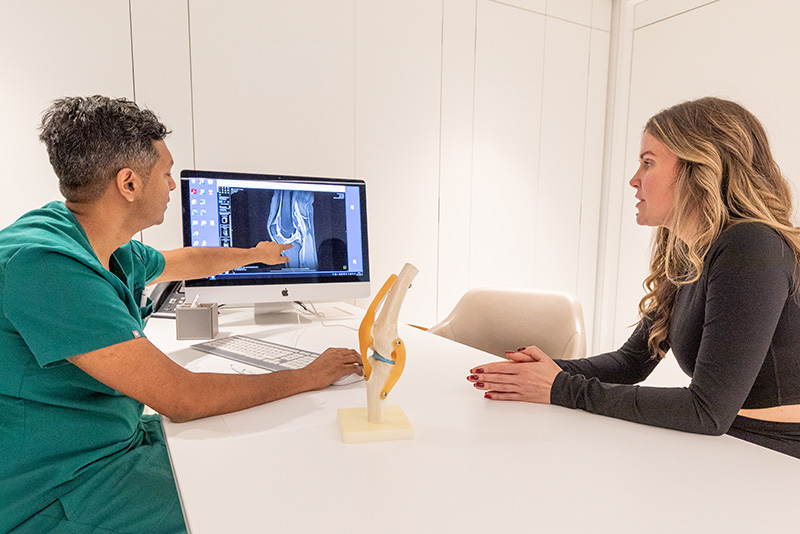
Treatment follows the cause. Where the instability is muscular, from pain, arthritis or deconditioning, the answer is rarely surgery and almost always a structured strengthening plan that teaches the muscles to support the knee again, sometimes helped by calming an inflamed joint first. Where there is a genuine mechanical cause, a torn ligament, an unstable kneecap or a catching meniscus, the plan is built around the scan findings and may, in the right patient, involve reconstruction or repair. I treat a great many female ACL injuries with enhanced fixation and a great many revision cases, so where surgery is the answer you are in experienced hands. No two unstable knees leave with the same plan, because no two people arrive with the same knee, the same demands or the same life to fit recovery around.
The two mistakes I see with an unstable knee
Instability is a place where knee care fails in both directions. Some patients are rushed into surgery for a knee that was giving way from weakness and would have been rebuilt with the right rehabilitation. Others, often young and active with a torn ligament, are told to manage and left for years, while the knee gives way again and again and does further damage to the cartilage and meniscus every time. Neither is acceptable. The job is to tell the muscular knee from the mechanical one and act on what is really there. When surgery is the right answer I will say so plainly and perform it. When it is not, I will say that too.
Start with your knee's biological age
If you are unsure where your knee sits on this spectrum, here is the practical place to start. The Knee Age quiz takes sixty seconds, scores the factors that drive knee ageing, and tells you your knee's biological age against the age on your passport. It costs nothing, and it turns a vague worry into something you can act on.
Frequently Asked Questions
Either the muscles are briefly switching off, usually from pain or weakness, or there is a mechanical problem such as a torn ligament, a catching meniscus or an unstable kneecap. The two feel similar but need different treatment, so the cause is worth identifying.
Not always, but it should be assessed, especially if the knee also swells, locks or gives way when you pivot. Repeated giving way can damage the cartilage and meniscus over time, so finding the cause early protects the joint.
Yes. A knee that gives way when you turn or pivot, particularly in someone active, is a classic sign of an ACL injury and deserves examination. Not all giving way is an ACL, but it is one of the important causes to rule in or out.
Often not. Where the instability is from weakness or arthritis, structured strengthening usually fixes it. Surgery is for a genuine mechanical cause such as a torn ligament or unstable kneecap in a suitable patient.
Protect yourself from falls, avoid pivoting activities until it is assessed, and see a knee specialist to find the cause. If the knee has locked, swollen or will not straighten, seek assessment promptly.
A knee surgeon who assesses both the muscular and the mechanical causes rather than assuming one. You can book an assessment with Dr Arj Imbuldeniya on 0207 859 4016 or at admin@ortholongevity.co.uk.
Why Choose OrthoLongevity?
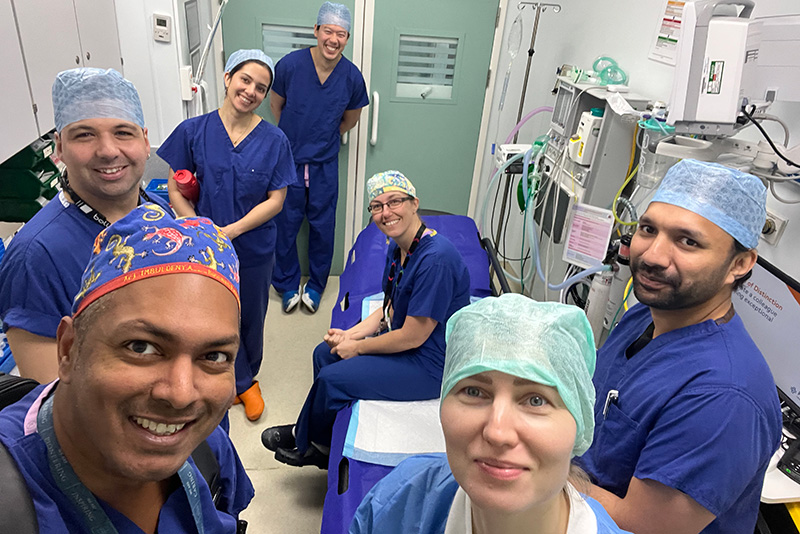
At OrthoLongevity, we deliver care built on innovation, compassion and clinical excellence. Led by Dr Arj Imbuldeniya, our clinic uses advanced therapies within our holistic Ortholongevity™ approach to help patients regain mobility and improve their quality of life. With access to the latest technologies and a dedicated, compassionate team, we focus on finding the right treatment for every individual.
Patient Reviews
What Our Patients Say
Verified Doctify reviews from patients treated by Dr Arj Imbuldeniya at OrthoLongevity.