
Request an appointment
Reserve your spot with our team in just minutes.
Other Knee Treatments
Private Robotic Assisted Knee Replacement in London
Robotic-assisted knee replacement in London with Dr Arj Imbuldeniya, consultant knee surgeon. Robotic guidance lets him plan the operation on your own anatomy and execute it with a precision conventional instruments cannot match, for both partial (single-compartment) and total knee replacement. Not every arthritic knee needs a full replacement, and the choice follows your scans, not a default.
Free 60-second assessment
How old are your knees?
Your knees have a biological age, and it is often not the age on your passport. Of the people who have taken this test, 55 per cent found their knees were older than they are, and one in eight by ten years or more. Sixty seconds, free, and you get one number and the single change that would take the most years off it.
Find my Knee Age, free →A Precise, Personalised Approach to Knee Surgery
Whether you’re looking for the latest surgical technology, faster access to care, or a personalised recovery plan, our specialist team is here to help. Combining advanced robotic systems with consultant-led expertise, we aim to deliver exceptional outcomes for every patient.
What Is Robotic-Assisted Knee Replacement Surgery?
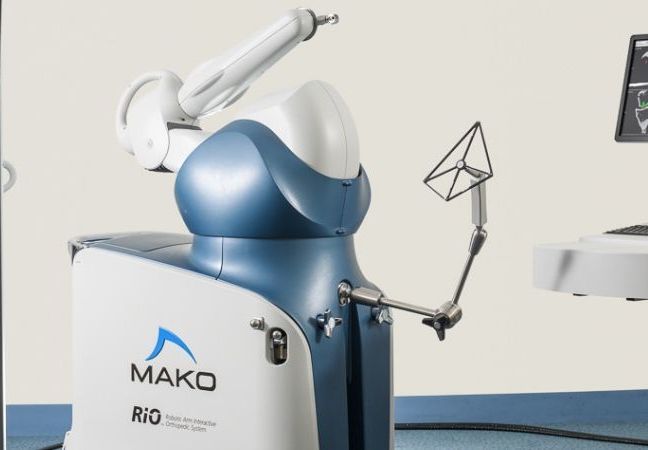
Robotic-assisted total knee replacement is an advanced surgical technique that enhances the precision and outcomes of traditional knee replacement procedures. Using cutting-edge systems such as MAKO and CORI, our surgeons can achieve unparalleled accuracy, down to a fraction of a millimetre, when placing implants, resulting in a smoother, more natural-feeling knee joint.
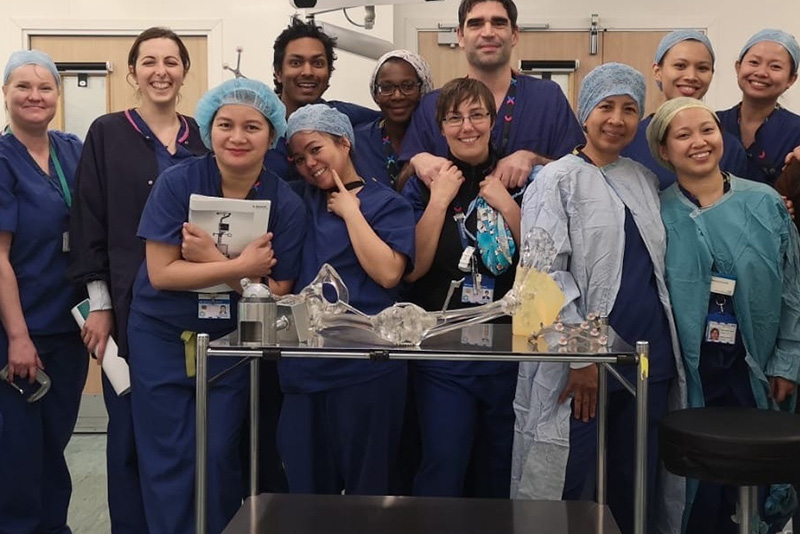
At OrthoLongevity, robotic-assisted surgery is performed by Consultant Orthopaedic Surgeon Dr Arj Imbuldeniya, one of the first surgeons in the UK and Europe to adopt this technology in both NHS and private practice. His extensive experience ensures that every procedure is planned and executed to achieve the best possible results.
As a knee and hip surgeon, Dr Arj Imbuldeniya also performs ACL reconstruction, including specialist techniques for ligament injuries in active patients.
For a clear breakdown of what a private knee replacement costs, including my published surgeon's fees, see my knee replacement cost guide.
How Does Robotic-Assisted Knee Replacement Work?
Robotic-assisted surgery begins with a detailed 3D mapping of the knee using either preoperative scans or real-time optical trackers. This creates a personalised surgical plan tailored to each patient’s anatomy. During the operation, the robotic system guides the surgeon’s movements, ensuring optimal implant positioning while protecting healthy bone and tissue.
The technology also allows live feedback during surgery, helping to achieve perfect alignment and balance for each knee. This level of precision can improve long-term function, reduce recovery time, and extend the lifespan of the implant.
Partial knee replacement and robotic knee resurfacing
Not every arthritic knee needs a full replacement. When arthritis is confined to one compartment of the knee, a robotic-assisted partial knee replacement, sometimes called knee resurfacing, replaces only the worn surface and preserves the healthy bone, cartilage and ligaments around it. The result for suitable patients is a smaller operation, a more natural-feeling knee and a faster recovery. Robotic guidance is at its most valuable here, because the margin for error in a partial replacement is smaller than in a total knee. Whether a partial or total replacement is right for you is a decision made from your scans, your examination and your goals, never from a default.
Robotic patellofemoral joint replacement
One form of partial replacement deserves its own mention. When arthritis is isolated to the joint between the kneecap and the femur, the patellofemoral joint, a robotic-assisted patellofemoral replacement resurfaces only that compartment and leaves the rest of the knee untouched. It is a specialised operation that relatively few surgeons perform regularly, and patient selection is everything: done for the right knee it transforms stair pain and kneecap grinding, done for the wrong one it disappoints. Patellofemoral surgery is one of my specialist interests, and I assess every kneecap-dominant arthritic knee for the full range of options, from rehabilitation and injection therapy through to robotic patellofemoral replacement. If your main problem is pain at the front of the knee or an unstable kneecap, those pages explain the full pathway.
Precision in Practice
Benefits of Robotic-Assisted Knee Replacement Surgery
-
Improved accuracy Implants are positioned with exceptional precision for optimal joint function and long-term results.
-
Less invasive Robotic guidance reduces tissue disruption and trauma, allowing faster recovery.
-
Faster recovery Most patients can walk within 24 hours and return home the following day.
-
Personalised planning Each procedure is customised to your unique anatomy for a natural fit and feel.
-
Consistent results Enhanced predictability and reduced risk of alignment errors compared with traditional methods.
Precision Meets Experience
With advanced technology and expert surgical technique, robotic-assisted knee replacement offers a new standard in accuracy and recovery. Under the care of Dr Arj Imbuldeniya, patients benefit from personalised treatment plans and evidence-based care designed to restore comfort, movement, and quality of life.
Key Information About Private Robotic Assisted Knee Replacement in London
This surgery is ideal for patients with knee arthritis, cartilage loss, or chronic pain who have not found relief from non-surgical treatments such as physiotherapy, medication, or injections. Dr Imbuldeniya will discuss your suitability during your consultation.
The robotic system (MAKO or CORI) assists your surgeon in precisely removing damaged tissue and positioning the implant. The technology enhances accuracy while allowing the surgeon full control at all times.
Thanks to the minimally invasive approach, many patients can walk the same day and return home within 24 hours. Recovery includes physiotherapy and a tailored rehabilitation plan to help restore movement and strength.
With accurate alignment and advanced materials, robotic knee replacements are designed to last many years. Long-term results depend on factors such as activity level, rehabilitation, and overall health.
Potential Side Effects
As with any surgical procedure, robotic-assisted knee replacement carries some risks, including infection, stiffness, swelling, or temporary discomfort around the incision site. However, advanced surgical planning, antibiotic protection, and expert postoperative care greatly minimise these risks. Most patients recover quickly and safely under our supervision.
What to Expect from Your Robotic Knee Replacement
Every stage of your treatment is designed for safety, precision, and comfort.
-
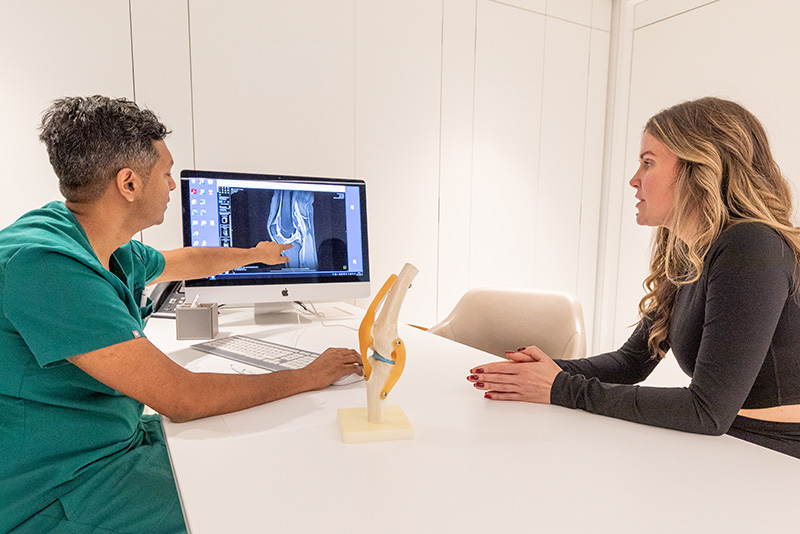
 Initial Consultation Your journey begins with a comprehensive consultation with Dr Arj Imbuldeniya, who will review your medical history, imaging, and symptoms to confirm whether robotic-assisted surgery is the best option for you.
 -
 Tests and Assessment Detailed imaging such as X-rays, MRI, or CT scans will be used to create a 3D map of your knee. This data is used to plan the exact positioning of the implant and anticipate how your joint will move after surgery.
 -
 The Procedure During surgery, the robotic system assists the surgeon in accurately removing damaged bone and aligning the implant. You’ll receive anaesthesia and postoperative support from our multidisciplinary team. Most patients stay in hospital for one night before returning home.
How Much Does a Private Robotic Knee Replacement Cost in London?
Our fees are published openly. Dr Arj’s surgeon fee for a robotic-assisted total knee replacement is £3,499 to £3,695, and £3,250 to £3,489 for a robotic-assisted partial knee replacement. The hospital fee, which covers your bed, theatre, implants and imaging, and the anaesthetist’s fee are quoted separately and vary by hospital. You receive a complete written quotation before you commit to surgery, so there are no surprises. For a full breakdown of what a private knee replacement involves financially, read our guide to private knee replacement costs in the UK or see the published fees page. Self-pay patients are welcome, and we work with all major UK and international insurers.
Robotic Knee Replacement Reviews
Experiences of Precision-Led Knee Surgery
Doctify-verified reviews from patients who have undergone robotic-assisted knee replacement under the care of Dr Arj Imbuldeniya at OrthoLongevity.

Robotic knee success
I underwent partial knee replacement surgery assisted by a robotic arm at The Lister Hospital in Chelsea. The operation was a success.
Amanda Jane
Calm and professional robot assisted knee replacement
Extremely caring and professional. I am chuffed to bits with my robot assisted total knee replacement.
Patient
Book Your Consultation
If you’re living with persistent knee pain and are considering private robotic-assisted knee replacement surgery in London, book a consultation today with Dr Arj Imbuldeniya at OrthoLongevity in Mayfair. Our team will discuss your options, answer your questions, and create a personalised treatment plan to help you regain movement and confidence.
Frequently Asked Questions
Many patients considering robotic-assisted surgery want to understand what to expect before treatment. Here are some of the most common questions we’re asked in clinic:
Robotic-assisted surgery provides enhanced precision and customisation. The technology allows for detailed planning and real-time feedback, leading to more accurate implant positioning and smoother recovery.
Absolutely. The robot doesn’t operate independently, it guides and assists your surgeon. Every movement is under Dr Imbuldeniya’s direct control.
Most patients can resume driving four to six weeks post-surgery, depending on recovery progress. Dr Imbuldeniya will provide individual guidance.
Yes. These systems have been rigorously tested and are used worldwide. Studies show they help improve implant positioning, reduce complications, and promote faster recovery.
Dr Arj’s surgeon fee is £3,499 to £3,695 for a robotic-assisted total knee replacement and £3,250 to £3,489 for a robotic-assisted partial knee replacement. The hospital fee and anaesthetist’s fee are quoted separately by the hospital, and you receive a complete written quotation before committing to surgery. Full details are on our fees page and in our knee replacement cost guide.
Why Choose OrthoLongevity?
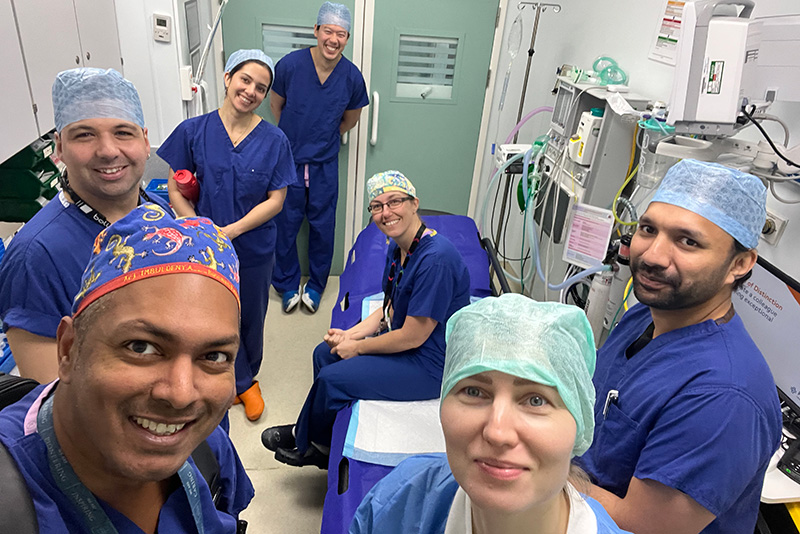
At OrthoLongevity, we deliver care built on innovation, compassion and clinical excellence. Led by Dr Arj Imbuldeniya, our clinic uses advanced therapies within our holistic Ortholongevity™ approach to help patients regain mobility and improve their quality of life. With access to the latest technologies and a dedicated, compassionate team, we focus on finding the right treatment for every individual.
Clinical Feedback
Patient Experiences of Robotic Knee Surgery
Verified patient reviews reflecting the precision, reassurance and outcomes achieved with robotic-assisted knee replacement under expert consultant-led care.