
Request an appointment
Reserve your spot with our team in just minutes.
Other Knee Treatments
Knee Arthritis Treatment in London
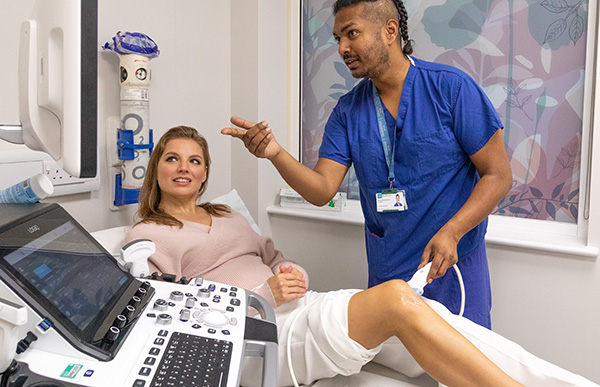
Knee arthritis treatment in London with Dr Arj Imbuldeniya, consultant knee surgeon. Treatment ranges from strength and lifestyle programmes through ultrasound-guided injections, including high-dose PRP, hyaluronic acid and Arthrosamid, to robotic-assisted partial and total knee replacement, sequenced in the right order for your knee. Most patients treated this way do not need surgery.
Free 60-second assessment
How old are your knees?
Your knees have a biological age, and it is often not the age on your passport. Of the people who have taken this test, 55 per cent found their knees were older than they are, and one in eight by ten years or more. Sixty seconds, free, and you get one number and the single change that would take the most years off it.
Find my Knee Age, free →The two mistakes I see every week
Most of the patients who come to see me with knee arthritis have already been told a story about their knee, and the story is usually one of two. The first is that nothing can be done until the knee is bad enough to replace, so they should come back when they cannot walk. The second is that a replacement is inevitable, so they might as well have it now and get it over with. I have spent twenty-five years in orthopaedics watching both stories cost people years of good movement, and they fail in opposite directions for the same reason: nobody was accountable for the whole pathway, so nobody sequenced it properly.
I am a consultant knee surgeon, and most of my patients with arthritis will never see the inside of my operating theatre. That is not reluctance. I operate every week, and when a knee genuinely needs surgery I say so plainly and perform it myself. But because I can offer everything, from strength work to injections to robotic-assisted replacement, I am in no hurry to reach for any one of them. The decision about what your knee needs should be made by someone with the whole toolkit open on the table.
If surgery does become the right step at the right time, my private knee replacement cost guide explains every part of the price before you commit to anything.
What is knee osteoarthritis?
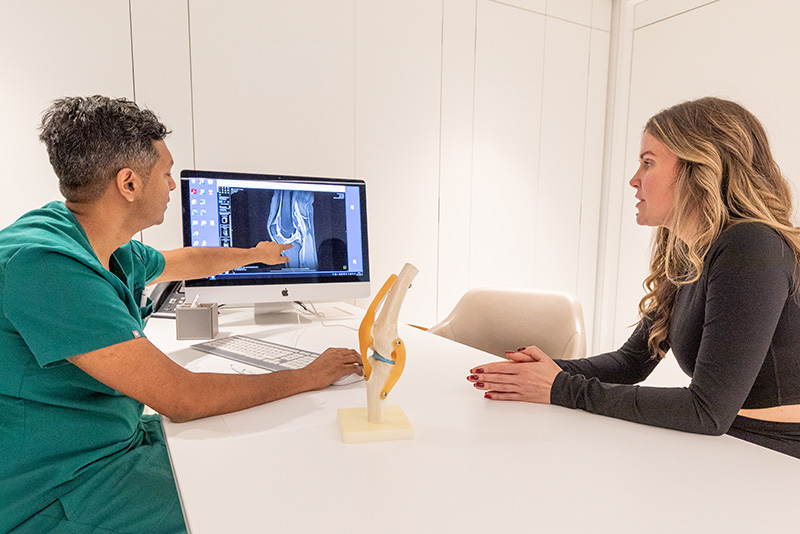
Knee osteoarthritis is a progressive condition in which the cartilage lining the knee thins, the bone beneath it reacts, the joint lining becomes inflamed and the surrounding muscles weaken. It is the most common cause of knee pain over the age of fifty, and it is not simply wear and tear, nor the inevitable price of getting older.
The most useful way I know to think about cartilage is as an inheritance. You were born with a fixed amount, it cannot be topped up, and the question that matters is not how much you have spent but how fast you are spending what remains. Genetics wrote the opening balance. Injury, body weight, muscle weakness and metabolic health set the spending rate. Almost everything I do for arthritic knees, short of surgery, is about slowing the spending.
There is a second idea worth holding on to, and it is almost insultingly simple. The pain you feel is not the state of the joint alone; it is the state of the joint multiplied by the inflammation within it. You cannot do much about the first number. You can do a great deal about the second. That is why two people with identical X-rays can live entirely different lives, one walking the golf course on a Saturday morning, the other standing at the bottom of the stairs working out whether the handrail will take their weight. I never treat the X-ray. I treat the knee, and the person attached to it.
Symptoms of knee arthritis
The common symptoms of knee arthritis are pain at the front, inner side or deep within the knee, stiffness after rest that eases with movement, swelling after activity, grinding or clicking on stairs, and in later stages pain that disturbs sleep.
Running underneath all of them is the symptom nobody lists: the slow shrinking of a life. The tennis quietly given up, the ski trip not booked, the dog walked a shorter way round. If that pattern is familiar, the right time to be assessed is now, while the options are still plentiful, rather than in five years when several of the doors have closed.
At a Glance
Knee arthritis treatment without surgery
Effective non-surgical treatment for knee arthritis starts with strength and biology, then adds ultrasound-guided injections where they are needed. This is the part of the pathway where most of my patients spend most of their time, and it is where most replacements are avoided. We do the right things in the right order, because in arthritis care the order is what makes each step work.
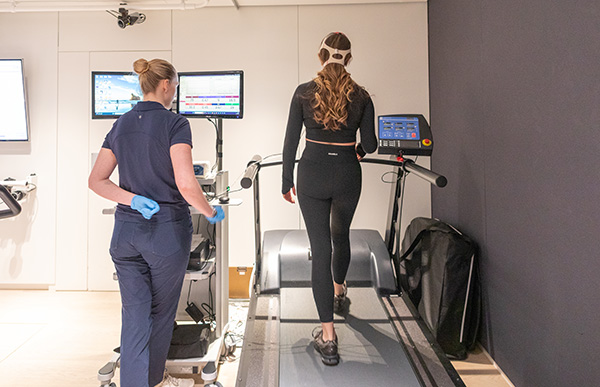
The foundation is biology. Body composition, metabolic health, nutrition and sleep together set the level of inflammation your knee lives in, and improving them turns down the second number in that simple sum. Alongside biology sits strength. The quadriceps and the muscles around the hip are the knee's shock absorbers, and rebuilding them is the single most evidence-backed treatment for knee arthritis in existence, which is why it sits underneath everything else I do rather than beside it. My approach is set out on the strength training and nutrition for knee health page.
One more thing before the treatments themselves: none of this is a protocol. Two patients with identical knee scans routinely leave my clinic with entirely different plans, because they are entirely different people, in weight, in health, in anatomy, in family history, in eating habits, in state of mind and in the lives their knees have to serve. The OrthoLongevity approach is tailored to you as an individual and to goals that are genuinely yours. And it is practical. I understand how hard behaviour change is around children, work and caring for others, because I live those constraints too, and I was not always someone who prioritised his own health. A plan you cannot live with is not a plan, so we build one you can.
Knee arthritis injections: which one, and when
Injections for knee arthritis include steroid, hyaluronic acid, high-dose PRP and Arthrosamid, and the right choice depends on the stage of your arthritis and what your knee needs it to achieve. I deliver every injection under real-time ultrasound guidance, so the treatment goes precisely where it is intended to go.
A steroid injection settles an angry, swollen flare quickly, and that is its proper job: a firebreak for the short term, never a strategy for the long one. Hyaluronic acid supplements the joint's natural lubricant and can improve comfort for months in the right patient. High-dose PRP uses a concentrated preparation of your own platelets to calm the joint's biology, and my protocol, built on the Arthrex ACP Max system, delivers a far higher total platelet dose than the standard PRP offered in most London clinics. Arthrosamid, a single hydrogel injection that integrates with the joint lining, has become one of the most valuable tools I have for patients determined to avoid or delay a replacement.
Stem cells for knee arthritis: the honest answer
The treatments marketed in London as stem cells for knee arthritis are usually bone marrow aspirate concentrate, or BMAC, prepared from your own bone marrow cells. In carefully selected patients I offer BMAC at Cromwell Hospital as part of a structured programme, and this is the honest version of that conversation. The evidence is developing, no injection can regrow cartilage that has been lost, and a clinic promising otherwise is selling you the story rather than the science. What BMAC can do, in the right knee, is help reduce symptoms and support the biology of the joint. Complexity is a very good place to hide, and the stem cell marketplace hides a great deal in it. I would rather tell you plainly what a treatment can and cannot do.
When knee replacement is the right answer
Some knees need surgery, and recognising that moment matters exactly as much as avoiding the operations that are not needed. This is the other side of the failure I described at the top of the page. Delaying a genuinely necessary replacement does not preserve a knee. It spends muscle, fitness and years of comfortable life, and it makes the eventual operation harder to recover from.
When the arthritis is confined to one compartment, a robotic-assisted partial knee replacement resurfaces only the worn surface and preserves the healthy bone, cartilage and ligaments around it. When the whole joint is worn, a robotic-assisted total knee replacement lets me plan the operation on your anatomy and execute that plan with a precision conventional instruments cannot match. For arthritis isolated behind the kneecap I perform robotic patellofemoral replacement, a specialised operation relatively few surgeons do regularly.
I am selective about surgery, not reluctant. If your knee has reached the point where a replacement will give you more than everything else combined, I will say so in the first consultation, explain my reasoning, and carry out the operation with the same care that went into trying to make it unnecessary.
Start with your knee's biological age
If you are unsure where your knee sits on this spectrum, here is the practical place to start. The Knee Age quiz takes sixty seconds, scores the factors that drive knee ageing, and tells you your knee's biological age against the age on your passport. It costs nothing, and it turns a vague worry into something you can act on.
Frequently Asked Questions
No, knee arthritis cannot be cured, and I would be cautious of anyone who tells you otherwise. What it can be is managed so well that it stops dictating the shape of your life. The aim is not a cure. The aim is a knee that lets you forget about it for most of the day.
There is no single best treatment for knee arthritis; there is a right order. Strength and biological health first, because they help every knee at every stage. Ultrasound-guided injections where symptoms need more, chosen by stage. Replacement when the joint is truly worn and everything else has been properly tried, or when delay would cost you more than surgery. A treatment that is right for one knee is wrong for another, which is why the assessment matters more than any single therapy.
The most reliable way to avoid a knee replacement is to act early: build strength, address weight and metabolic health, and use the right injection at the right stage rather than waiting until the joint is beyond helping. Most people with knee arthritis do not need a replacement now, and many never will. If you take one sentence from this page, take this one: an X-ray showing arthritis is the beginning of a conversation, not a verdict.
Yes. Even in bone on bone arthritis, properly structured strength work is safe, effective and improves the outcome of any future surgery. The belief that exercise wears a knee out faster is one of the most damaging myths in joint care, and I spend a good part of every clinic gently dismantling it.
Stem cell treatments for knee arthritis are usually bone marrow aspirate concentrate, and in selected patients, as part of a wider programme, they can help symptoms. They do not regrow cartilage and they are not a cure. I offer BMAC where it is appropriate, and where it is not I will tell you so and explain what would serve you better.
Usually within days, at Lanserhof at The Arts Club in Mayfair or at my clinics across London. You can book an appointment online, call my team on 0207 859 4016, or email admin@ortholongevity.co.uk.
Why Choose OrthoLongevity?
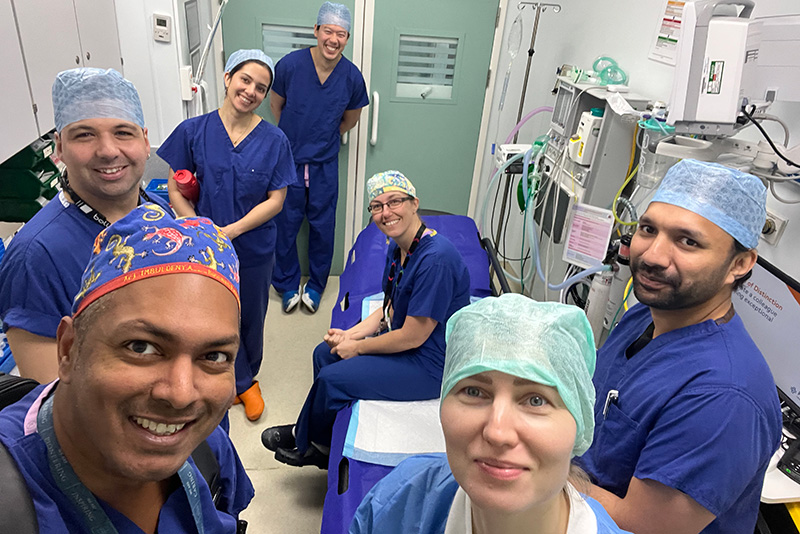
At OrthoLongevity, we deliver care built on innovation, compassion and clinical excellence. Led by Dr Arj Imbuldeniya, our clinic uses advanced therapies within our holistic Ortholongevity™ approach to help patients regain mobility and improve their quality of life. With access to the latest technologies and a dedicated, compassionate team, we focus on finding the right treatment for every individual.
Patient Reviews
What Our Patients Say
Verified Doctify reviews from patients treated by Dr Arj Imbuldeniya at OrthoLongevity.