
Request an appointment
Reserve your spot with our team in just minutes.
Other Knee Treatments
Knee Cartilage Repair in London
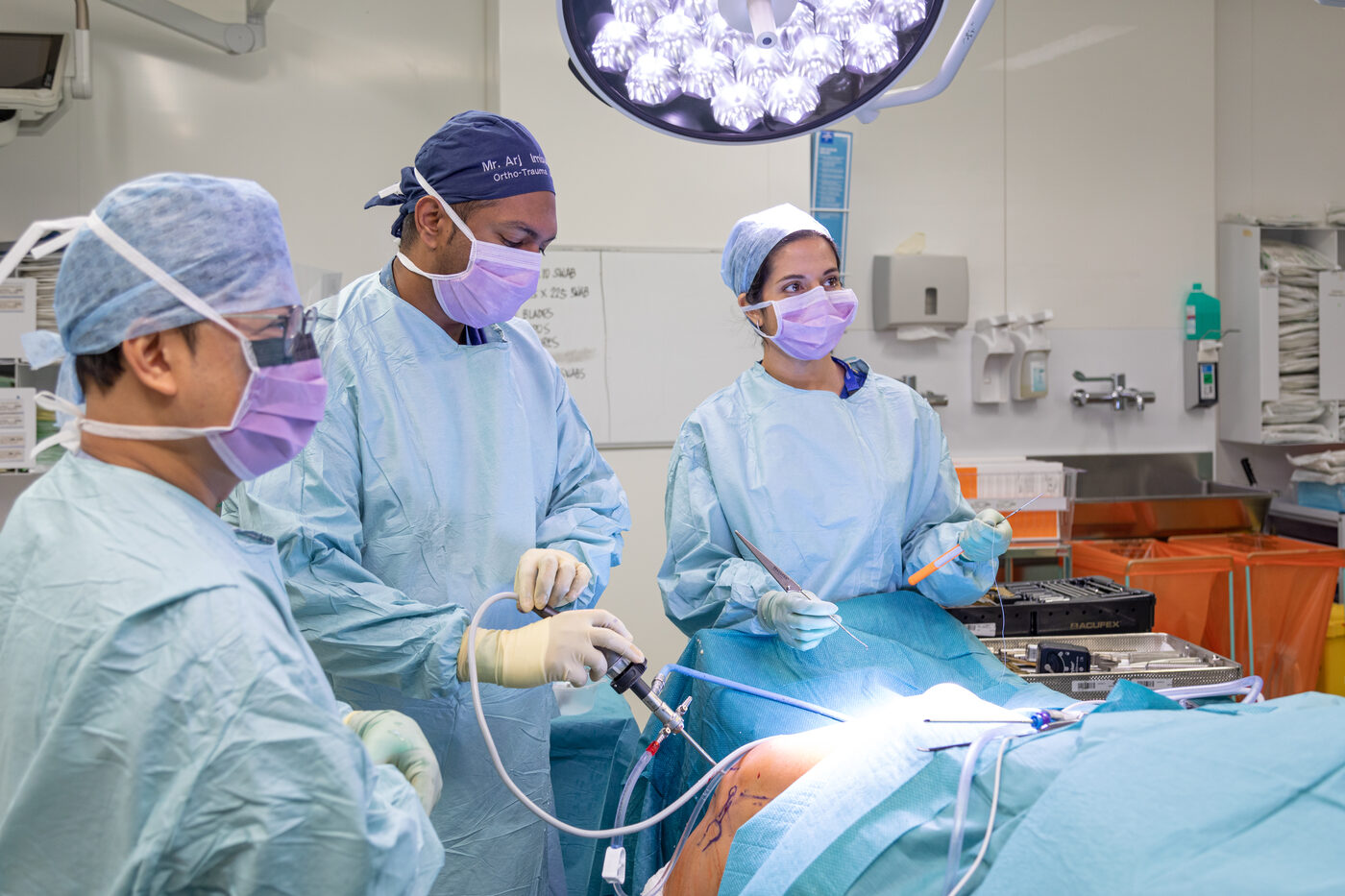
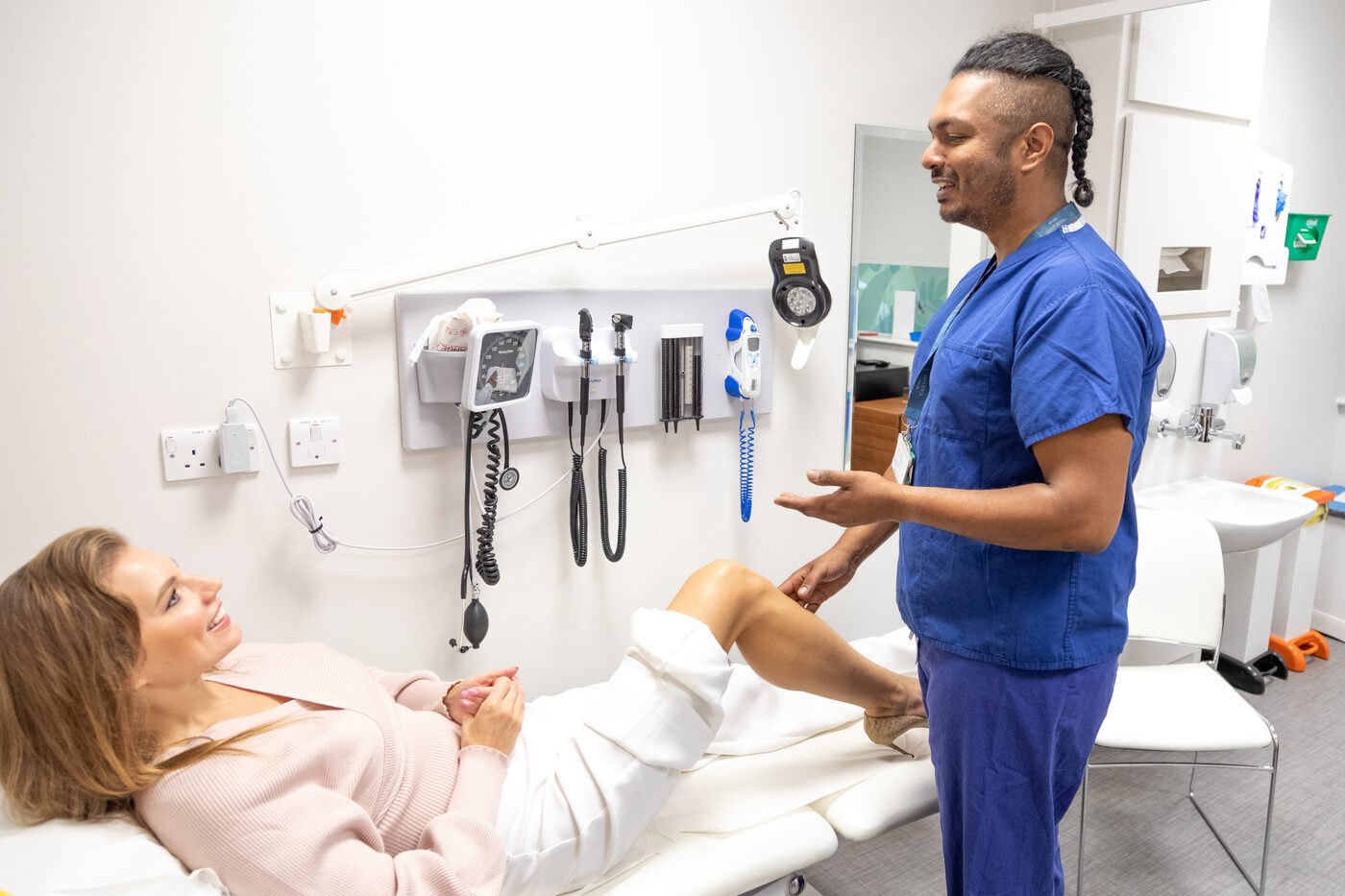
I am a consultant knee surgeon in London treating damaged knee cartilage, from injuries in young athletes to wear in people who want to stay active for decades. Treatment runs in order: protecting the joint without surgery first, then keyhole cartilage repair such as AutoCart or the Agili-C implant when a defect needs it, and realignment or partial replacement when the problem is bigger than a repair.
Free 60-second assessment
How old are your knees?
Your knees have a biological age, and it is often not the age on your passport. Of the people who have taken this test, 55 per cent found their knees were older than they are, and one in eight by ten years or more. Sixty seconds, free, and you get one number and the single change that would take the most years off it.
Find my Knee Age, free →What is knee cartilage damage?
A cartilage defect is a patch where the smooth lining at the end of the thigh bone, shin bone or kneecap has been damaged or worn away, leaving rougher tissue or bone beneath.
It may follow a twisting injury, a dislocated kneecap or a blow to the knee, or develop slowly from years of load on a joint that is not quite aligned. Typical symptoms are pain on loading, swelling after activity, catching or clicking, and a knee you no longer quite trust. On an MRI scan a defect can look dramatic and cause no trouble, or look small and cause a great deal, which is why I treat the person and the knee, not just the image.
Can knee cartilage repair itself?
Not in any meaningful way, because cartilage has almost no blood supply, so once it is lost the body cannot rebuild it to the original standard.
That single fact shapes everything. The aim of good cartilage care is to protect what you have, unload the damaged area and, where it will genuinely help, give the body the best possible conditions to fill a defect with repair tissue. If you take one sentence from this page, take this one: the cartilage you keep matters far more than the cartilage anyone can make for you.
Knee cartilage repair without surgery
Many cartilage problems settle without an operation, provided the knee is properly loaded, strengthened and given time.
That means building strength around the hip and knee, managing body weight and load, improving sleep and recovery, and, where inflammation is holding things back, an ultrasound-guided injection from my knee injection clinic, such as PRP or bone marrow concentrate. No two patients get the same plan, because your anatomy, your health and the shape of your week are your own, and a plan that ignores your real life will not survive it.
You will see injections advertised as cartilage repair injections or as regrowing cartilage. None of them regrow lost cartilage. Some, used at the right moment, calm the joint enough to let the rest of the plan work, and that is how I use them.
Knee cartilage repair surgery: AutoCart, Agili-C and more
When a defect is causing real symptoms and has not responded to a proper programme, keyhole cartilage repair can restore a better surface to the joint.
The technique depends on the size, depth and position of the defect. AutoCart uses your own cartilage, taken and finely prepared during the same operation, and returned to the defect with a biological glue, so the repair is built from your own tissue in a single procedure. The Agili-C implant is a scaffold, derived from coral, placed into the defect to support the body's own repair of both cartilage and the bone beneath it. Loose or damaged fragments from osteochondritis dissecans can sometimes be fixed back in place, and bone marrow concentrate can be used to support a repair.
Cartilage rarely fails in isolation. If the leg is out of alignment, a realignment osteotomy can move load away from the damaged area so a repair has a chance. If the kneecap is unstable, it may need stabilising first. Where damage is widespread across one part of the knee, a partial knee replacement may be the more honest answer.
Who is suitable for cartilage repair?
Cartilage repair works best for a contained defect in an otherwise healthy, well-aligned and stable knee, in a patient prepared to commit to a long rehabilitation.
It is not a treatment for widespread arthritis, and offering it to the wrong knee only delays the right operation. The other failure is just as real: knees with a repairable defect left too long until the damage spreads. My job is to tell you which side of that line you are on, and why.
Cartilage repair surgery recovery time
Recovery after cartilage repair is measured in months rather than weeks, because new repair tissue needs time and protected loading to mature.
Most patients spend a period on crutches with protected weight-bearing, followed by a structured programme that rebuilds movement, then strength, then confidence. A return to running or pivoting sport comes later and is earned in stages. Your plan is set around your own goals and your own commitments, whether that is a squad training schedule or a young family.
I see patients for cartilage problems in Mayfair, at Cromwell Hospital in Kensington, in Chiswick and in Brentford, so care is close to home whether you live in central London, in Chelsea, Fulham, Battersea, Putney or Wimbledon, in west London from Hammersmith and Ealing to Richmond and Twickenham, or further out in Harrow, Watford, Windsor, Reading, Surrey or Berkshire. Surgery takes place at Cromwell Hospital, The Lister Hospital in Chelsea or The Clementine Churchill Hospital in Harrow.
How much does knee cartilage surgery cost?
My surgeon's fee for keyhole cartilage surgery is £1,110 to £2,274, and for cartilage restoration with AutoCart or the Agili-C implant it is £2,274 to £2,380, depending on what the operation involves. A new consultation is £350.
The hospital fee, the anaesthetist's fee and the cost of any implant, such as Agili-C, are added on top and vary by procedure and hospital. Realignment surgery is quoted individually. My team will always give you a single written estimate before anything is booked, and my full fees are on the pricing page.
Worried about knee cartilage damage?
Book a consultation and we will work out whether your knee needs protection, repair or something else.
Cartilage Repair Questions
Not to the original standard. Cartilage has almost no blood supply, so the body cannot rebuild it fully. Repair techniques such as AutoCart and Agili-C help the knee fill a defect with repair tissue, and protecting the cartilage you have remains the priority.
For the right knee, yes. A contained defect in a stable, well-aligned knee can do well with repair. For widespread arthritis it is the wrong operation, and other options such as realignment or partial replacement are more appropriate.
Cartilage repair treats a defined area of damage and keeps your own joint. A knee replacement resurfaces part or all of the joint with an implant when damage is too widespread to repair.
Expect several months. Most people have a period of protected weight-bearing on crutches, then a staged rehabilitation programme, with a return to impact sport later and only once strength and control are back.
Many insurers cover cartilage surgery when it is clinically indicated, though some newer implants need specific approval. Check with your insurer before surgery, and my team can help with the codes they need.
My surgeon's fee is £1,110 to £2,274 for keyhole cartilage surgery and £2,274 to £2,380 for cartilage restoration with AutoCart or Agili-C. Hospital, anaesthetist and implant costs are added on top, and my team gives you one written estimate before anything is booked.
You can book online through the website, call my team on 0207 859 4016 or email admin@ortholongevity.co.uk.
Patient Reviews
What Our Patients Say
Verified Doctify reviews from patients who have received treatment for knee cartilage problems under the care of Dr Arj Imbuldeniya at OrthoLongevity.