
Request an appointment
Reserve your spot with our team in just minutes.
Other Knee Treatments
Knee Swelling and Fluid on the Knee: Causes and Treatment
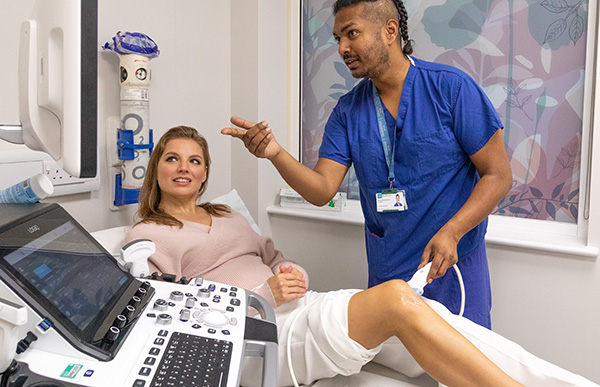
A swollen knee, or fluid on the knee, is a symptom rather than a diagnosis. It means the joint is irritated and producing extra fluid, and the job is to find out why. Arthritis, a meniscus or cartilage injury, and inflammation are the common reasons, and a soft lump behind the knee, a Baker’s cyst, is usually fluid from the same joint tracking backwards. Treating the cause settles the swelling.
Free 60-second assessment
How old are your knees?
Your knees have a biological age, and it is often not the age on your passport. Of the people who have taken this test, 55 per cent found their knees were older than they are, and one in eight by ten years or more. Sixty seconds, free, and you get one number and the single change that would take the most years off it.
Find my Knee Age, free →What does swelling or fluid on the knee mean?
A swollen knee is a joint that is irritated and making more fluid than it should, which is the knee’s way of protecting itself. It matters because the fluid itself is not the problem, it is the messenger. Swelling that comes on within hours of an injury often means bleeding inside the joint from a ligament or cartilage tear. Swelling that builds slowly over days usually points to arthritis or inflammation. A knee that is swollen, hot and very painful needs prompt review to exclude infection. The timing and the story tell me a great deal before I have even examined it.
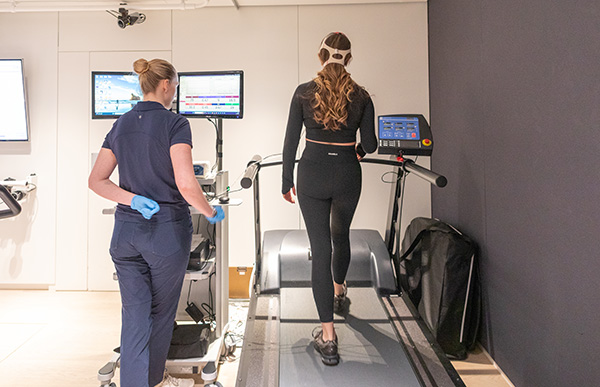
The common causes of a swollen knee
Most knee swelling comes from one of a few sources. Osteoarthritis is the commonest, an ageing joint that flares and holds fluid. A meniscus or cartilage injury irritates the joint and makes it swell, sometimes with catching or giving way. Inflammatory conditions, such as gout or an inflammatory arthritis, produce a hot, swollen joint. And a sudden, tense swelling after a twisting injury can mean a torn ligament bleeding into the knee. Each of these is treatable, but each is treated differently, which is exactly why the cause has to be found rather than guessed.
What is a Baker’s cyst?
A Baker’s cyst is a soft swelling at the back of the knee, and it is almost always a symptom, not a disease in its own right. When the knee makes extra fluid because of arthritis or a meniscus problem, some of that fluid tracks into a pouch behind the knee and forms the cyst. This is why treating the cyst directly rarely works for long: drain it and it refills, because the joint that feeds it is still irritated. The lasting answer is to treat the knee problem producing the fluid, and the cyst usually settles with it. A cyst that becomes suddenly painful, or a calf that swells, should be checked promptly to rule out other causes.
At a Glance
How I treat a swollen knee
The plan follows the cause, never the fluid alone. Where arthritis is driving the swelling, the work is to calm the inflammation and load the joint sensibly, with strength work and, where a knee is inflamed and will not settle, an ultrasound-guided injection. Where a meniscus or cartilage injury is the source, the plan is built around that. Where the picture suggests infection or an inflammatory cause, that is investigated and treated on its own terms, sometimes with other specialists. Draining fluid can relieve a tense, painful knee, but on its own it treats the symptom and not the cause, so I use it as part of a plan rather than as the plan. No two swollen knees leave with the same pathway, because no two people arrive with the same joint or the same life to fit treatment around.
When a swollen knee needs to be seen quickly
Most knee swelling can be assessed in a routine way, but a few patterns deserve prompt attention. A knee that is hot, very swollen and painful with a fever needs urgent review to exclude infection. A knee that swells tensely within an hour of a twisting injury may have a serious ligament or cartilage tear. And swelling behind the knee accompanied by a swollen, painful calf should be checked without delay. These are uncommon, but they are the reason it is better to be seen and reassured than to wait and wonder.
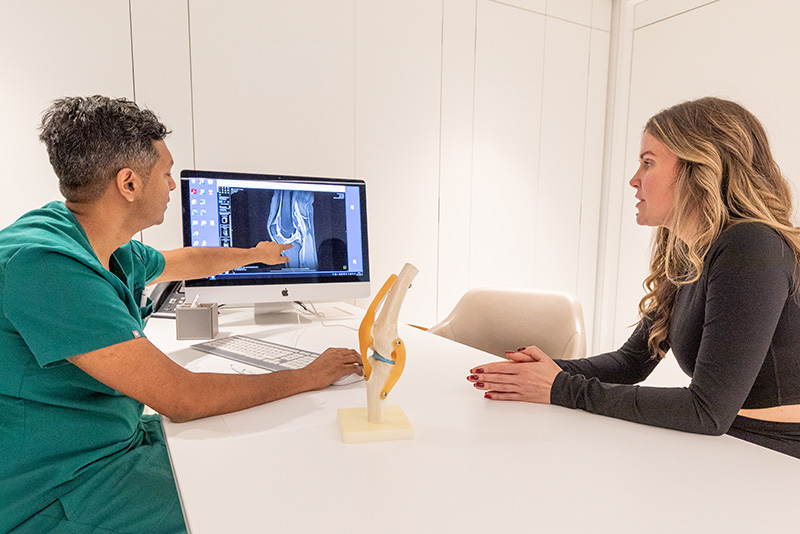
Start with your knee's biological age
If you are unsure where your knee sits on this spectrum, here is the practical place to start. The Knee Age quiz takes sixty seconds, scores the factors that drive knee ageing, and tells you your knee's biological age against the age on your passport. It costs nothing, and it turns a vague worry into something you can act on.
Frequently Asked Questions
It means the joint is irritated and producing extra fluid in response to a problem such as arthritis, a cartilage or meniscus injury, or inflammation. The fluid is the messenger, so the aim is to find and treat the cause rather than just remove it.
The common causes are osteoarthritis, a meniscus or cartilage injury, inflammatory conditions such as gout, and bleeding into the joint after a twisting injury. Each is treated differently, so the cause needs to be identified.
A soft swelling at the back of the knee formed when the joint makes extra fluid, usually from arthritis or a meniscus problem, and some of it tracks into a pouch. It is a symptom of the knee problem rather than a disease in itself.
Draining can relieve a tense, painful knee, but on its own it treats the symptom and not the cause, so the fluid often returns. It works best as part of a plan that also treats the underlying problem.
Seek prompt care if the knee is hot, very swollen and painful with a fever, if it swelled tensely within an hour of a twisting injury, or if swelling behind the knee comes with a swollen, painful calf.
A knee specialist who will find the cause of the swelling rather than just drain it. You can book an assessment with Dr Arj Imbuldeniya on 0207 859 4016 or at admin@ortholongevity.co.uk.
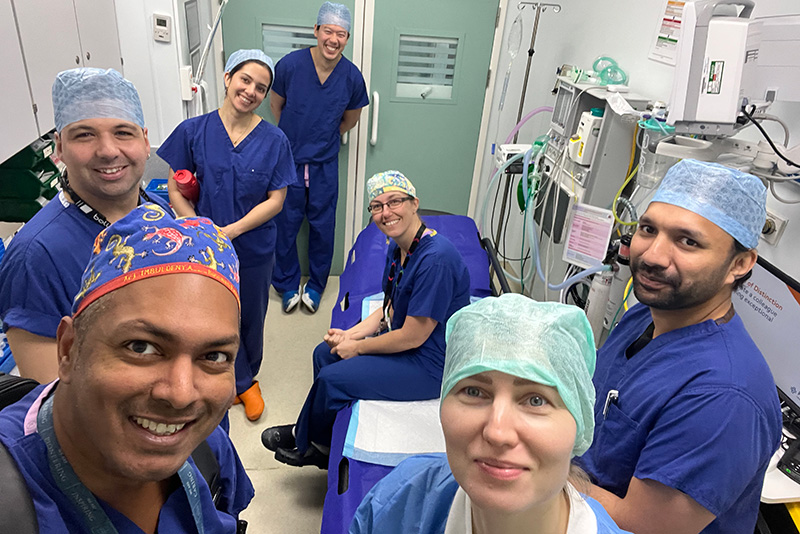
Why Choose OrthoLongevity?
At OrthoLongevity, we deliver care built on innovation, compassion and clinical excellence. Led by Dr Arj Imbuldeniya, our clinic uses advanced therapies within our holistic Ortholongevity™ approach to help patients regain mobility and improve their quality of life. With access to the latest technologies and a dedicated, compassionate team, we focus on finding the right treatment for every individual.
Patient Reviews
What Our Patients Say
Verified Doctify reviews from patients treated by Dr Arj Imbuldeniya at OrthoLongevity.