
Request an appointment
Reserve your spot with our team in just minutes.
Other Knee Treatments
Knee Pain on Stairs: Causes and Treatment in London
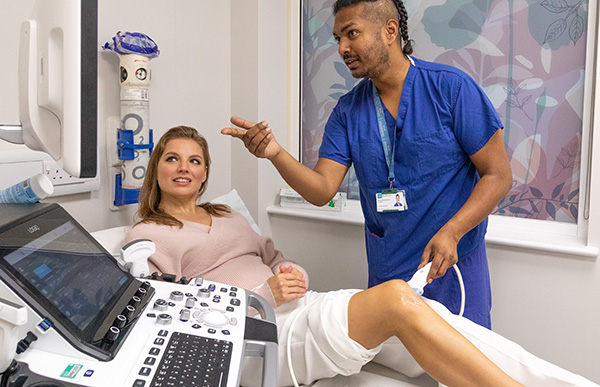
Knee pain on stairs is one of the most common and most telling knee symptoms. Pain going down stairs usually points to the kneecap joint or early wear at the front of the knee, while pain going up more often reflects the main joint or weak thigh muscles. Most of it improves with the right strength work and load guidance, without surgery. The pattern tells me where to look.
Free 60-second assessment
Is this normal for your age, or not?
It is the question underneath almost every knee I see. Pain on the stairs at fifty means something different from pain on the stairs at thirty, and knowing which one you are dealing with changes what you should do about it. The Knee Age test gives you a biological age for your knees against your real age in sixty seconds, free, along with the one thing that would improve it most.
Find my Knee Age, free →Why does my knee hurt going down stairs?
Going downstairs loads the front of the knee harder than almost anything else you do. As you step down, the thigh muscle works while lengthening and drives the kneecap firmly against the thigh bone, so any wear, irritation or maltracking at that joint shows up here first. This is why the kneecap joint, the patellofemoral joint, so often announces itself on stairs and hills before anywhere else. Pain going down is a front-of-knee story until proven otherwise.
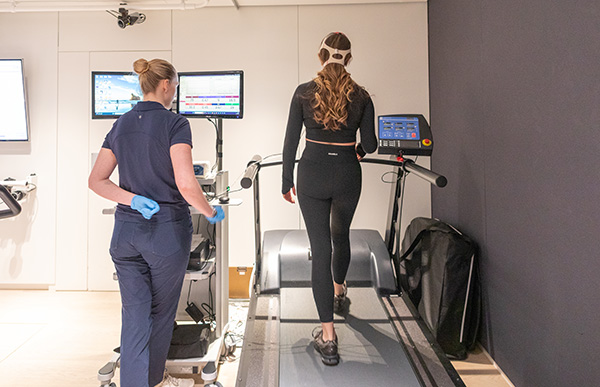
Why does my knee hurt going up stairs?
Going up asks the main knee joint and the thigh muscles to lift your whole body weight, one leg at a time. Pain here more often reflects wear in the main joint, a meniscus problem, or simply thigh muscles that are not strong enough for the task, so the joint takes the strain the muscle should carry. The two patterns, up and down, point in different directions, which is exactly why the detail matters.
What knee pain on stairs usually means
Most stair pain comes down to one of three things: irritation or early wear at the kneecap joint, osteoarthritis in the main joint, or a meniscus that is torn or degenerate. Weak or poorly balanced thigh muscles sit underneath most of them, quietly making everything worse. None of these is a reason to panic, and most improve considerably once the right structure is treated and the muscles are rebuilt. The uncommon exception, a knee that locks, gives way or swells sharply on stairs, deserves a proper look rather than reassurance alone.
At a Glance
How I treat knee pain on stairs
Treatment starts with working out which joint the stairs are provoking, because the plan for a kneecap problem is not the plan for the main joint. For most people the foundation is targeted strength work to rebuild the thigh and hip muscles that protect the knee, with load and technique guidance so the joint is challenged without being overwhelmed. Where a specific structure is inflamed and will not settle, an ultrasound-guided injection can calm it enough for the rehabilitation to take hold. Two people with the same stair pain often leave with quite different plans, because their strength, their weight, their goals and the shape of their day are different. That is the point of doing it properly.
The two mistakes I see with stair pain
Knee care fails in both directions, and stair pain is a good example. Some patients are pushed toward surgery for pain that was mechanical and muscular and would have responded to the right rehabilitation. Others are handed a leaflet of exercises and left for years while a genuinely worn or torn knee deteriorates and the best options quietly close off. Neither serves you. My job is to work out which knee is actually in front of me and treat that. When an operation is the right answer I will tell you honestly, and I am the surgeon who will carry it out. When it is not, I will be just as honest.
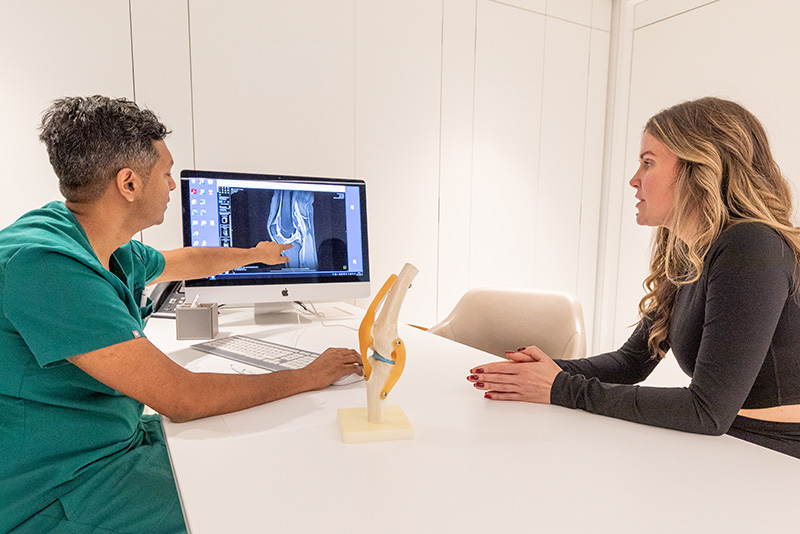
Start with your knee's biological age
If you are unsure where your knee sits on this spectrum, here is the practical place to start. The Knee Age quiz takes sixty seconds, scores the factors that drive knee ageing, and tells you your knee's biological age against the age on your passport. It costs nothing, and it turns a vague worry into something you can act on.
Frequently Asked Questions
Because going down loads the kneecap joint at the front of the knee much harder than going up. Pain specifically on the way down usually points to irritation or early wear at the kneecap joint rather than the main joint.
It can be, especially pain going up stairs or in the main joint. But kneecap irritation and meniscus problems also cause stair pain, and weak thigh muscles underlie many cases, so the cause is worth identifying rather than assuming.
Going up asks the main knee joint and thigh muscles to lift your body weight. Pain here more often reflects wear in the main joint, a meniscus issue, or thigh muscles that are not strong enough, so the joint takes strain the muscle should carry.
Usually, yes. Most stair pain improves with targeted strength work, load guidance and, where a structure is inflamed, an ultrasound-guided injection. Surgery is considered only when the joint genuinely needs it.
See someone if the pain is limiting you, not improving, or if the knee locks, gives way or swells sharply on stairs. Those features deserve a proper assessment rather than reassurance alone.
Through a plan built around your starting strength, not a generic sheet. It usually targets the thigh and hip muscles that protect the knee, progressed sensibly. You can arrange an assessment on 0207 859 4016 or at admin@ortholongevity.co.uk.
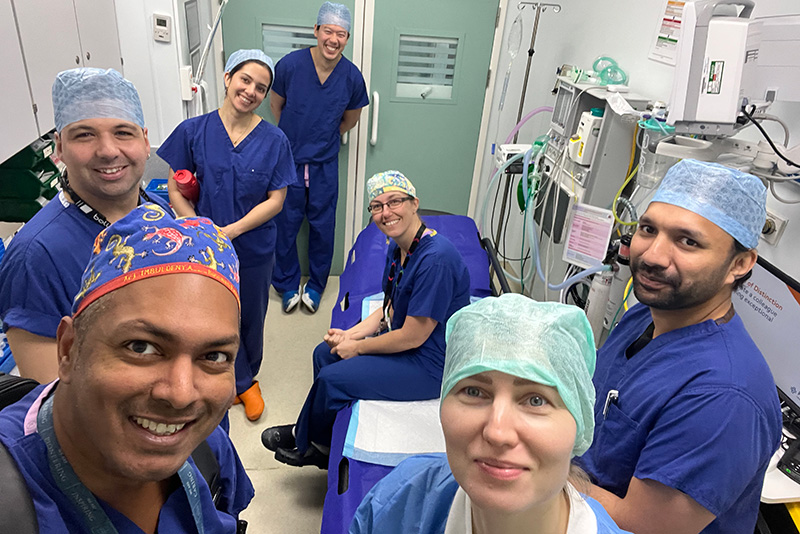
Why Choose OrthoLongevity?
At OrthoLongevity, we deliver care built on innovation, compassion and clinical excellence. Led by Dr Arj Imbuldeniya, our clinic uses advanced therapies within our holistic Ortholongevity™ approach to help patients regain mobility and improve their quality of life. With access to the latest technologies and a dedicated, compassionate team, we focus on finding the right treatment for every individual.
Patient Reviews
What Our Patients Say
Verified Doctify reviews from patients treated by Dr Arj Imbuldeniya at OrthoLongevity.