
Request an appointment
Reserve your spot with our team in just minutes.
Other Knee Treatments
Knee Pain in Menopause: Causes and Treatment in London
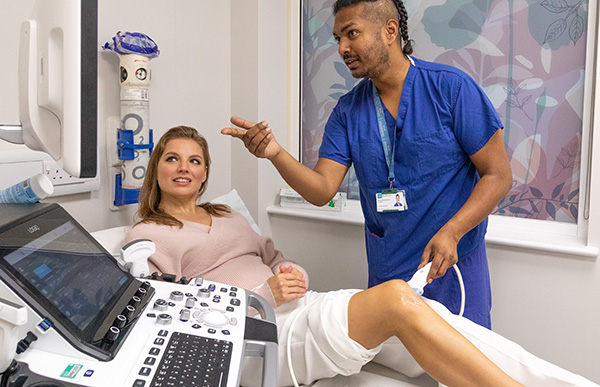
Knee pain that arrives or worsens around perimenopause and menopause is common and under-recognised. Falling oestrogen affects cartilage, tendon, bone, muscle and the way you feel pain, so aching, stiffness and tendon irritation often surface together in your late forties and fifties. Most of it responds to the right loading, strength work and, where needed, targeted treatment, without surgery. The first step is separating what is hormonal, what is mechanical and what is both.
Can menopause cause knee pain?
Yes, and it is one of the most overlooked causes of knee pain in women in their late forties and fifties. Oestrogen does far more than regulate the menstrual cycle. It helps maintain the collagen in your cartilage and tendons, the strength of your bone, the volume of your muscle and even the sensitivity of the nervous system that processes pain. As oestrogen falls through perimenopause and menopause, all of those shift at once. Cartilage and tendon become more easily irritated, muscle is harder to hold on to, and aches that would once have passed now linger. Many women are told this is simply ageing. It is more specific than that, and that specificity is exactly what makes it treatable.
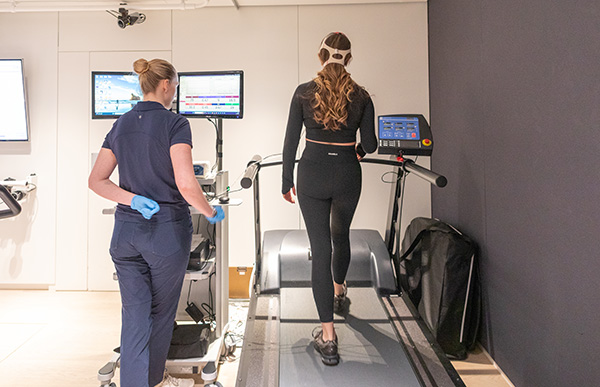
The knee problems that cluster around menopause
Three patterns show up again and again. The first is a general aching and stiffness in the knees, often worse in the morning, as the joint lining and cartilage lose some of their hormonal protection. The second is tendon irritation around the knee and kneecap, which becomes sore with activity that was comfortable before. The third is the early acceleration of osteoarthritis in a joint that was already wearing. These frequently overlap, which is why a single label rarely captures what is going on.
Why menopausal knee pain gets missed
Because it sits in the gap between two specialists. The gynaecologist manages the hormones and the orthopaedic surgeon manages the joint, and the knee pain falls down the middle. This is the two-sided failure I built my practice to correct. Some women are offered surgery for a knee that did not need it, when the real driver was tendon pain and deconditioning that the hormonal change had unmasked. Others are told it is all menopause and to wait it out, while a genuinely arthritic knee quietly worsens. Neither is good enough. The work is to look at the whole picture, hormonal and mechanical together, and act on what is truly there.
At a Glance
How I assess and treat menopausal knee pain
I start by separating the strands: a careful history and examination, and where needed a scan, to tell me whether I am dealing with cartilage wear, tendon irritation, early arthritis or a combination, and how much of the picture is hormonal. Where hormone replacement is relevant I will say so and work alongside your GP or menopause specialist rather than around them, because the joint and the hormones are part of the same story. The foundation of treatment is strength and loading work, because well-loaded cartilage, tendon and muscle are the single most effective protection against the changes menopause brings, and the same work protects bone. Where a structure is inflamed and will not settle, targeted treatment can help. Two women of the same age with the same scan will often leave with different plans, because their bodies, their histories and the lives they are fitting recovery around are different.
What you can do about knee pain in menopause
The most useful thing to understand is that menopausal knee pain is not something to simply endure, and it is rarely a straight line to a replacement. Strength work is the cornerstone, protecting the joint, the tendons and the bone at the same time, and it works even when it is started later than you would have liked. Managing weight, sleep and activity all pull in the same direction. Where the joint needs more, there are good non-surgical options, and where it genuinely needs surgery, that decision is made on the joint and the person, never on age alone. If you take one sentence from this page, take this one: the knee pain that arrives with menopause is common, it is specific, and it is treatable.
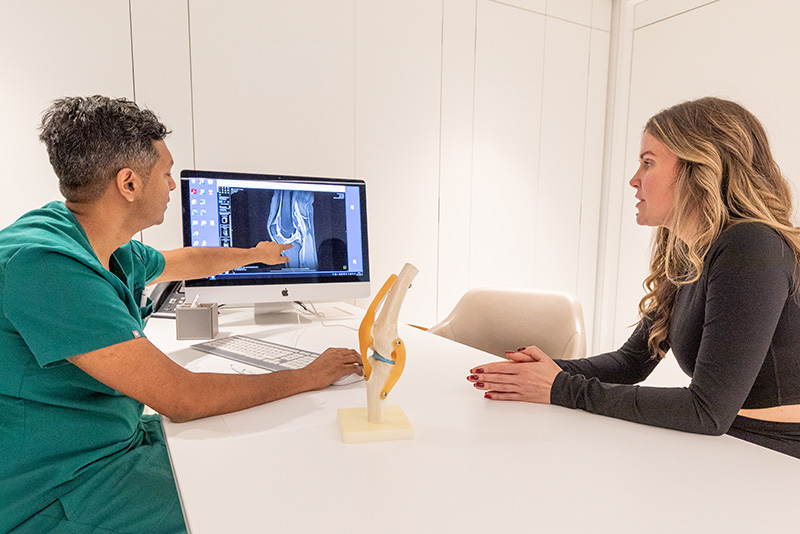
Start with your knee's biological age
If you are unsure where your knee sits on this spectrum, here is the practical place to start. The Knee Age quiz takes sixty seconds, scores the factors that drive knee ageing, and tells you your knee's biological age against the age on your passport. It costs nothing, and it turns a vague worry into something you can act on.
Frequently Asked Questions
Yes. Falling oestrogen affects cartilage, tendon, bone, muscle and pain sensitivity, so aching, stiffness and tendon irritation commonly surface or worsen around perimenopause and menopause. It is one of the most overlooked causes of knee pain in women in their late forties and fifties.
Because oestrogen helps maintain cartilage, tendon, bone and muscle, and as it falls those tissues become more easily irritated and harder to maintain. Aches that once passed quickly can linger, and existing wear can become more noticeable.
For some women it can, because oestrogen supports cartilage, tendon and bone. Whether HRT is right for you is a decision for you and your GP or menopause specialist. I focus on the mechanical side and work alongside them rather than duplicating their role.
Not always. It is often cartilage and tendon irritation unmasked by hormonal change rather than established joint wear, though menopause can also accelerate existing arthritis. Telling these apart is the point of a proper assessment, because the treatment differs.
Strength and loading work is the foundation, as it protects cartilage, tendon, muscle and bone. Where a structure is inflamed, targeted treatment can help. Where arthritis is the driver, the pathway follows the joint. The plan is tailored to you.
See someone who will look at both the hormonal and the mechanical picture rather than only one. You can book an assessment with Dr Arj Imbuldeniya on 0207 859 4016 or at admin@ortholongevity.co.uk.
Why Choose OrthoLongevity?
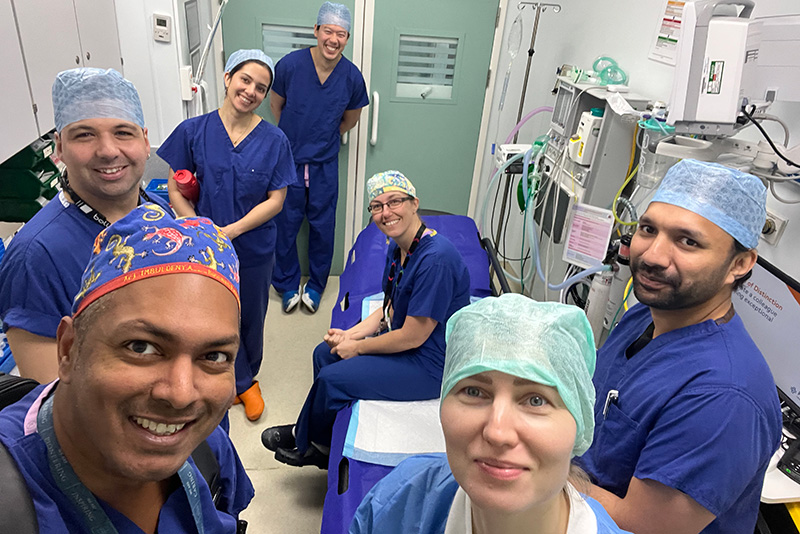
At OrthoLongevity, we deliver care built on innovation, compassion and clinical excellence. Led by Dr Arj Imbuldeniya, our clinic uses advanced therapies within our holistic Ortholongevity™ approach to help patients regain mobility and improve their quality of life. With access to the latest technologies and a dedicated, compassionate team, we focus on finding the right treatment for every individual.
Patient Reviews
What Our Patients Say
Verified Doctify reviews from patients treated by Dr Arj Imbuldeniya at OrthoLongevity.