
Request an appointment
Reserve your spot with our team in just minutes.
Other Knee Treatments
Knee Pain at Night: Causes and Treatment in London
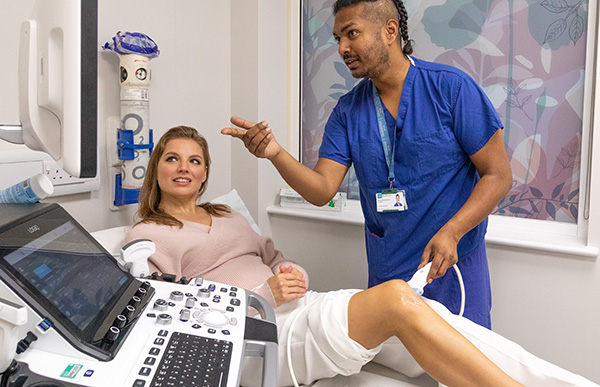
Knee pain that flares at night is usually the joint telling you it is inflamed rather than simply worn. Osteoarthritis, an irritated tendon or bursa, and a swollen joint all tend to feel worse once you are still and warm in bed. Most night pain settles with the right treatment aimed at the inflammation, not with surgery. The first step is working out what is driving it.
Free 60-second assessment
Is this normal for your age, or not?
It is the question underneath almost every knee I see. Pain at night at fifty means something different from pain at night at thirty, and knowing which one you are dealing with changes what you should do about it. The Knee Age test gives you a biological age for your knees against your real age in sixty seconds, free, along with the one thing that would improve it most.
Find my Knee Age, free →Why is my knee more painful at night?
Because pain is really the state of the joint multiplied by the inflammation within it, and at night the inflammation has the floor. Through the day, movement and distraction hold the pain at arm’s length. When you lie still and warm, blood flow to the joint rises, an inflamed knee swells a little more, and nothing is left to take your mind off it. That is why a knee that coped all day can ache at eleven at night. The pain is real, but it is usually a signal of inflammation rather than proof that the joint is failing.
The common causes of knee pain at night
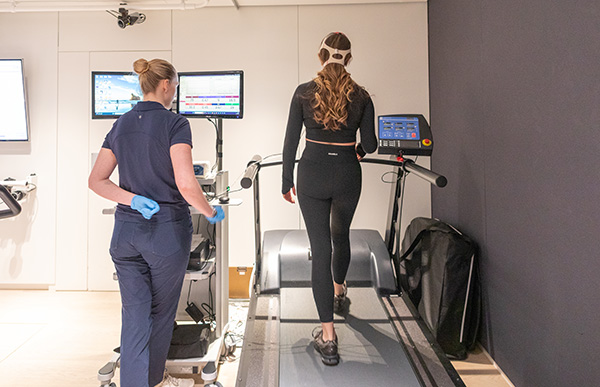
Three causes account for most of it. The first is osteoarthritis, where a worn joint becomes inflamed and stiffens when it rests. The second is an irritated tendon or bursa around the knee, which becomes sore when you lie on it or when the leg is still. The third is a knee that is holding fluid, a swollen joint that feels tight and tender the moment you stop moving. Less often, night pain that is severe, constant and unrelated to activity deserves prompt review to exclude something that needs more than reassurance. Telling these apart is the whole point of a proper assessment.
When knee pain at night is a red flag
Most night pain is inflammatory and settles. A smaller number of symptoms deserve to be seen promptly rather than waited out: pain that is severe and constant, pain that wakes you every single night and is getting worse regardless of what you do, or night pain with fever, unexplained weight loss or a knee that is hot and violently swollen. These are uncommon, but they are the reason I would rather see you and reassure you than have you assume the worst alone. This is the honest version of care, not the alarming one.
At a Glance
How I treat knee pain at night
Treatment follows the cause, not the symptom. For an arthritic, inflamed knee the work is to calm the inflammation and load the joint sensibly, with targeted strength work, weight and activity guidance, and where a knee is inflamed and will not settle, an ultrasound-guided injection to break the cycle so the rehabilitation can hold. For a tendon or bursa the pathway is similar, aimed at the specific structure. Where fluid keeps building, the cause of the swelling is what I treat, not just the fluid. No two knees leave with the same plan, because no two people arrive with the same joint, the same weight to carry, the same sleep or the same day to fit recovery around. That tailoring is deliberate.
The two mistakes I see with night knee pain
I see this go wrong in both directions, which is the pattern behind most knee care that fails. Some patients are rushed toward a knee replacement for night pain that was inflammatory and would have settled with the right treatment. Others are told to live with it for years, while a genuinely arthritic knee quietly worsens and the window to protect it closes. Neither is good enough. The job is to work out which knee is in front of me and act on that, not on a reflex. When surgery is genuinely the right answer I will say so plainly, and I am the surgeon who will do it. When it is not, I will say that just as plainly.
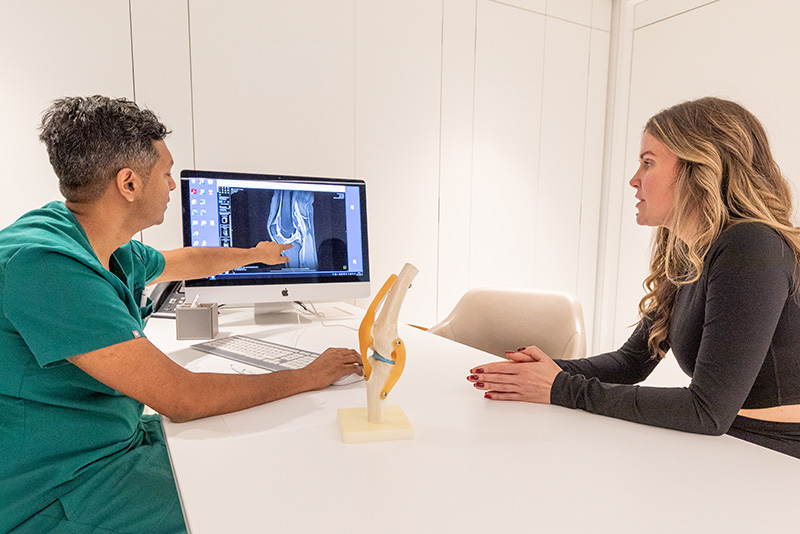
Start with your knee's biological age
If you are unsure where your knee sits on this spectrum, here is the practical place to start. The Knee Age quiz takes sixty seconds, scores the factors that drive knee ageing, and tells you your knee's biological age against the age on your passport. It costs nothing, and it turns a vague worry into something you can act on.
Frequently Asked Questions
Because an inflamed joint swells slightly and blood flow rises when you are still and warm in bed, and there is nothing to distract you from it. Most night knee pain is a sign of inflammation rather than proof the joint is failing.
Often, yes. A worn, arthritic knee tends to become inflamed and ache when it rests. But tendon and bursa irritation and a knee holding fluid also cause night pain, so it is worth having the cause identified rather than assumed.
Usually not. Most night pain is inflammatory and settles with the right treatment. See someone promptly if the pain is severe and constant, wakes you every night and is worsening whatever you do, or comes with fever, weight loss or a hot, very swollen knee.
By treating the cause. For an inflamed arthritic knee that means strength work, sensible loading and, where it will not settle, an ultrasound-guided injection. For a tendon or bursa the plan targets that structure. The plan is tailored to you, not to a template.
Very often, yes. Most night knee pain is inflammatory and responds to non-surgical treatment. Surgery is considered only when the joint genuinely needs it, and even then it is the right operation at the right time, not a reflex.
A knee specialist who will work out what is actually driving the pain rather than treat the symptom. You can book an assessment with Dr Arj Imbuldeniya on 0207 859 4016 or at admin@ortholongevity.co.uk.
Why Choose OrthoLongevity?
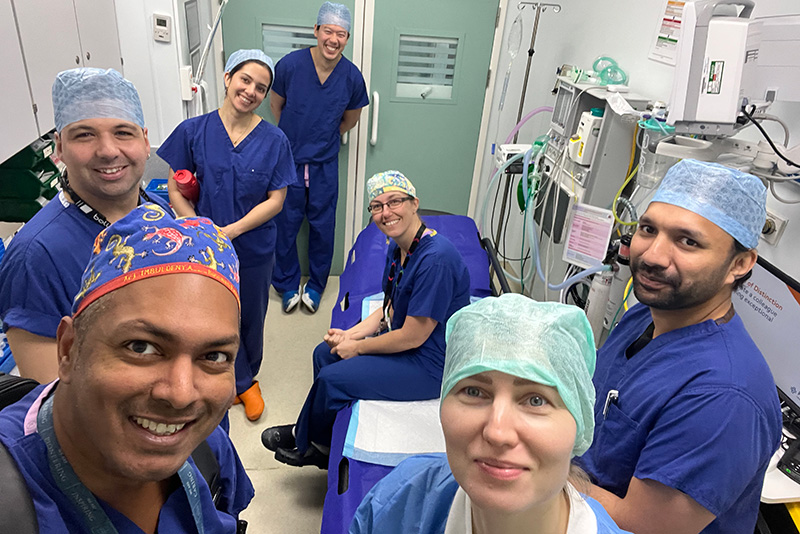
At OrthoLongevity, we deliver care built on innovation, compassion and clinical excellence. Led by Dr Arj Imbuldeniya, our clinic uses advanced therapies within our holistic Ortholongevity™ approach to help patients regain mobility and improve their quality of life. With access to the latest technologies and a dedicated, compassionate team, we focus on finding the right treatment for every individual.
Patient Reviews
What Our Patients Say
Verified Doctify reviews from patients treated by Dr Arj Imbuldeniya at OrthoLongevity.