
Request an appointment
Reserve your spot with our team in just minutes.
Other Hip Treatments
Röttinger Anterior Hip Replacement in London with Dr Arj Imbuldeniya
The Röttinger technique is a minimally invasive, muscle-sparing anterior approach to hip replacement. Rather than cutting through the muscles around the hip, the surgeon works between them, preserving the soft tissue that powers your recovery. For the right patient, that means less post-operative pain, a faster return to walking, and a shorter road back to the life you want to lead. Dr Arj Imbuldeniya is one of only a small number of UK surgeons offering this approach, having trained at OCM Munich, the centre of excellence where the technique was developed.

Röttinger Hip Replacement: Advanced Minimally Invasive Hip Surgery
The Röttinger approach is a minimally invasive hip replacement technique designed to preserve muscle and support faster recovery after surgery. Developed in Munich, Germany, the procedure allows the hip joint to be accessed through natural anatomical planes rather than by cutting through major muscle groups.
At OrthoLongevity, this advanced technique is offered to carefully selected patients seeking a modern approach to hip replacement surgery. Following a detailed consultation, Dr Arj Imbuldeniya will determine whether the Röttinger approach is appropriate based on your anatomy, symptoms, lifestyle and long-term goals.
Watch Dr Arj Imbuldeniya explain hip arthritis, when a hip replacement is needed, and the benefits of the Röttinger minimally invasive technique.
Röttinger anterior hip replacement in London with Dr Arj Imbuldeniya, a consultant hip surgeon and one of a small number of UK surgeons offering the anterior-based muscle-sparing approach. It reaches the hip between the muscles without cutting them, and most suitable patients in his own series return home within 24 hours, without a traction table or intra-operative X-ray.
Your Surgeon, Dr Arj Imbuldeniya
Dr Arj Imbuldeniya is a Consultant Orthopaedic Knee and Hip Surgeon with more than 25 years in orthopaedics and over a decade as a consultant. He trained in the Röttinger approach at OCM Munich, the centre that pioneered it, through clinical visits with Professor Robert Hube and Dr Michael Sostheim, dedicated cadaver training, and further operative experience alongside Mr Kristian Kley, and brought it to his patients in London. In his series of Röttinger hip replacements, around 95% of patients return home within 24 hours of surgery, recovering without the traditional hip precautions on bending, sleeping position or crossing the legs. His stance on surgery is a considered one: biology-first, surgery-last. He operates when an operation is genuinely the right answer, and not before, and when a hip replacement is the right call, it is performed by a high-volume surgeon who does this every week.
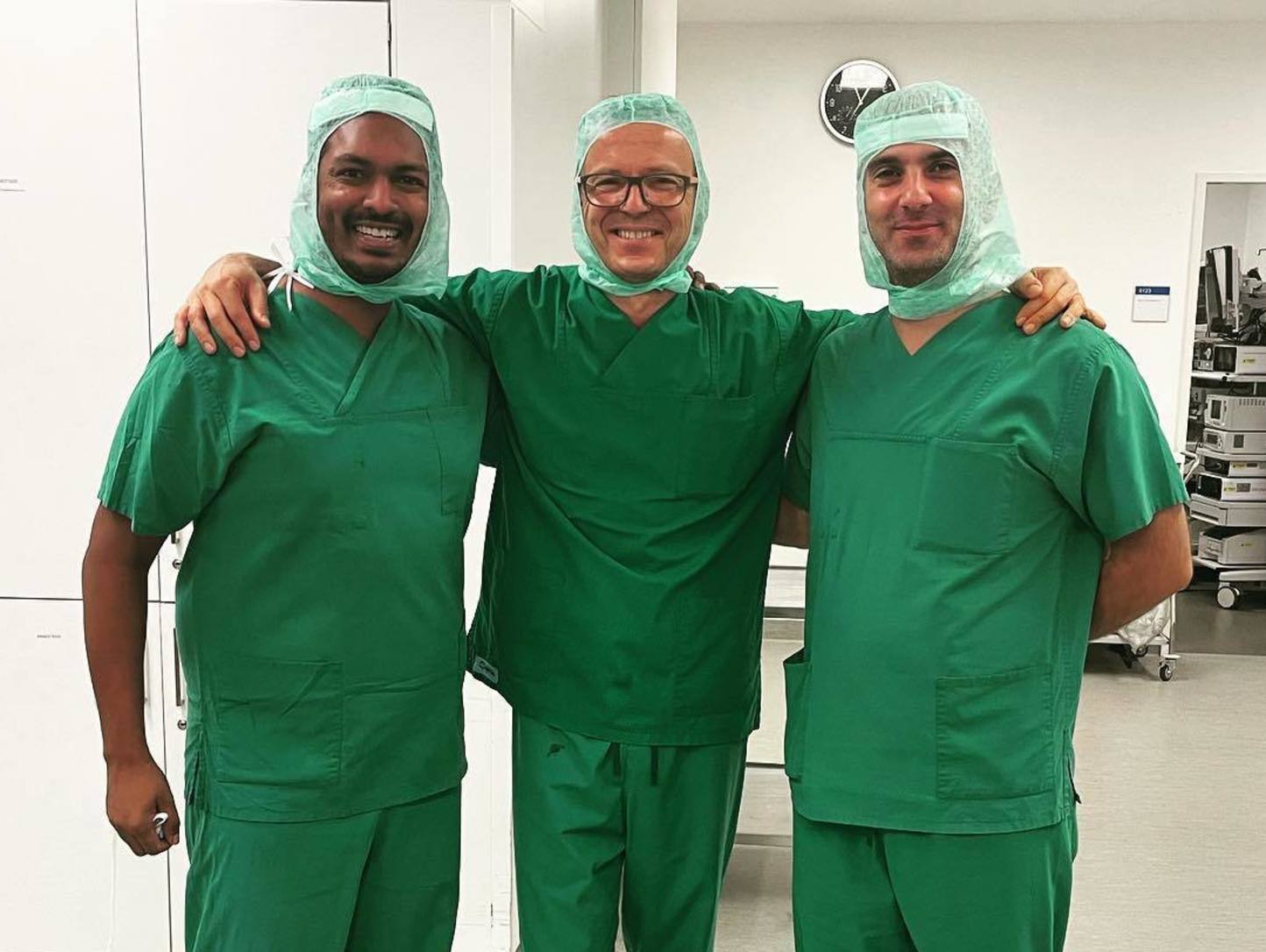
The Röttinger Approach: Finally available to patients in London
The Röttinger approach is an innovative muscle-sparing surgical technique pioneered by Dr Heinz Röttinger in Munich, Germany.
It allows the surgeon to access the hip joint through a small incision without cutting any muscles, working between natural anatomical planes instead between the tensor fascia lata and gluteus medius muscles.
This technique is particularly well-suited to both active patients and those with a raised BMI and offers significant advantages:
- Less post operative pain
- Shorter operative times
- Lower risk of dislocation
- Minimal scarring
- Faster mobilisation and discharge
At OrthoLongevity, Dr Arj Imbuldeniya was among the first orthopaedic surgeons in the UK to train on and offer this approach, having visited the OCM centre of excellence in Munich.
He first learned the technique in 2022 bringing this European innovation to his patients in London. The same muscle-sparing technique is offered at Cromwell Hospital, where Dr Arj Imbuldeniya performs it within their Rapid Return hip replacement programme.
The Benefits of the Röttinger Hip Replacement Technique
Minimally Invasive Hip Surgery
-
Faster discharge, In Dr Arj Imbuldeniya's audited series, around 95% of patients return home within 24 hours of their operation, and many leave the same day
-
Muscle-sparing approach with less soft tissue trauma
-
Lower risk of dislocation due to preserved stabilising structures
-
Reduced post-operative pain and need for medication
-
Earlier mobilisation and a quicker return to daily activities through Dr Arj Imbuldeniya's rapid recovery pathway
Our goal is to support early movement and reduce complications associated with traditional surgery, helping you recover safely, regain confidence in your hip, and return to normal life as quickly as possible.
Rapid Recovery and Outstanding Outcomes
Dr Arj Imbuldeniya's enhanced recovery protocol supports you through every stage of your recovery:
- Walking with a physiotherapist on the day of surgery, including practising stairs where appropriate.
- Many patients return to driving and everyday activities within 2 to 4 weeks, depending on individual recovery and medical guidance.
- Light exercise is often possible by 4 to 6 weeks.
- Most patients experience substantial recovery within 8 to 12 weeks, although recovery timelines vary between individuals.
In Dr Arj Imbuldeniya's audited series, around 95% of patients return home within 24 hours of surgery. Patients also benefit from a recovery pathway that avoids many of the traditional restrictions associated with hip replacement, helping them return to normal movement more quickly and confidently.
For a week by week guide to what to expect after surgery, read the hip replacement recovery page.
Together, these steps support a rapid return to walking and daily activity.
Hip replacement in younger patients
Hip replacement is no longer an operation reserved for later life. A growing number of my patients are in their forties and fifties, often with hip dysplasia, previous injury or early arthritis that no longer responds to biological treatment. For younger patients the calculation is different: the implant must last longer, the recovery must fit around work and family, and the muscle around the hip must be protected because it will be asked to perform for decades. This is where a muscle-sparing approach earns its keep. In my own series, around 95% of suitable patients return home within 24 hours, many without the traditional restrictions on bending or sleeping position. I should be equally honest about the limits: the strongest evidence for anterior-based approaches is in the first weeks of recovery, and by one year outcomes converge across approaches. For a younger patient, though, those first weeks are often exactly what matters, because they are the difference between six weeks off work and two.
Understanding the Röttinger Approach
Clear, expert guidance to help you feel confident about your surgery.
If you're considering a Röttinger hip replacement, it's natural to have questions about how the technique works, who it’s suitable for and what recovery looks like. Below, we’ve answered some of the most common questions to help you feel informed and prepared.
For a clear breakdown of what a private hip replacement costs, including my published surgeon's fees, see my hip replacement cost guide.
Anterior Hip Replacement in London: Röttinger or Direct Anterior?
If you have been researching anterior hip replacement in London, you will have met more than one name for what sounds like the same operation. The Röttinger approach is an anterior-based, muscle-sparing hip replacement. In the surgical literature it is also called the ABMS approach, the anterolateral approach or the modified Watson-Jones approach. It reaches the hip through the natural interval between two muscles, the tensor fascia lata and the gluteus medius, without detaching either of them. The direct anterior approach, often shortened to DAA, is the version most patients find first online. It works one muscle interval further forward, between the sartorius and rectus femoris on one side and the tensor fascia lata on the other. Both are anterior approaches. Both avoid cutting through muscle. The meaningful differences sit in the detail.
How the Röttinger approach compares with the direct anterior approach
The nerve most at risk in anterior hip surgery is the lateral femoral cutaneous nerve, which supplies feeling to the outer thigh. It lies directly in the path of the direct anterior approach, and published reviews report sensory disturbance in a significant proportion of DAA patients, around a third in one literature review (Cheok and Moo, Arthroplasty Today 2024), although this is usually temporary and affects sensation only. The Röttinger interval sits further from this nerve, and a randomised trial comparing the two approaches found a lower rate of nerve injury with the anterolateral route (Takada, Journal of Orthopaedic Science 2018).
The incision is also more lateral, away from the groin crease, which is associated with fewer wound problems than the direct anterior approach. It gives better access to the femur, which matters in stiffer, larger or more complex hips. And it is performed on a standard operating table without a traction table or intraoperative X-ray, equipment the direct anterior approach often depends on. In the largest published ABMS series of 1,308 hips, the femoral fracture rate was 0.6% (Gustke, CCJR 2018).
An honest note on what the evidence shows
No approach wins on everything, and no approach is right for every hip. The advantage of anterior-based, muscle-sparing surgery is in the early weeks, with less pain and a faster return to walking. By one year, studies show outcomes converge across all the main approaches. There is no large head-to-head trial of the Röttinger approach against the direct anterior approach on every outcome, so comparisons draw on published series from several authors. Some hips are also better served by a different approach altogether, for example very stiff hips, previously operated hips with scarring or metalwork, or bone that is significantly osteoporotic. Dr Arj matches the approach to the patient, not the patient to the approach.
The Röttinger approach is a muscle-sparing technique that accesses the hip joint by working between natural anatomical planes, rather than cutting through muscle. This helps preserve strength and stability around the hip, contributing to less pain after surgery and a faster early recovery. It differs from traditional approaches by minimising disruption to key structures while still allowing precise placement of the implant.
Suitability depends on your individual anatomy, overall health and lifestyle goals. The Röttinger approach can be particularly beneficial for active patients and those seeking a faster return to movement, but it is not the right option for everyone. Your consultant will carry out a thorough assessment and recommend the most appropriate surgical approach for you, ensuring the best possible outcome.
Recovery following the Röttinger approach is typically quicker than with more traditional techniques. Most patients are able to stand and walk on the same day, with a return to daily activities within a few weeks. Because muscles are preserved, there are usually fewer movement restrictions, allowing you to regain confidence in your hip sooner while following a structured rehabilitation plan.
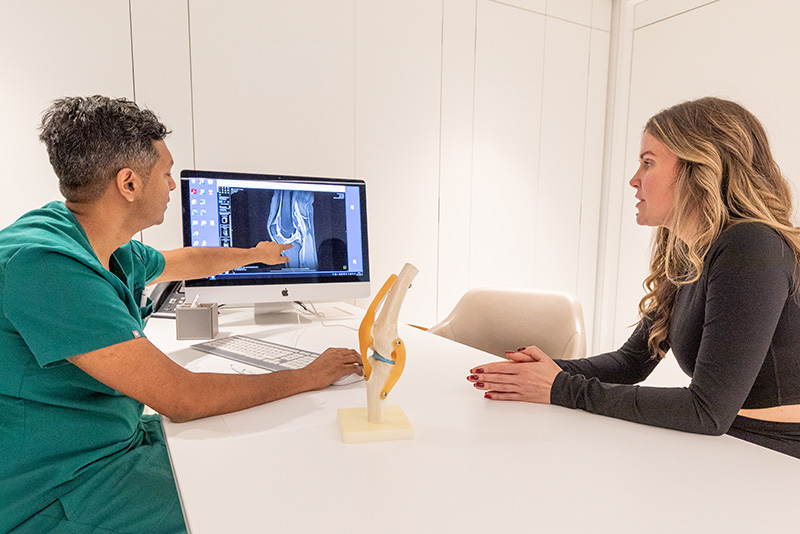
Potential Risks and Considerations
Hip replacement surgery is generally safe and highly effective when performed by an experienced specialist. However, as with any surgical procedure, there are potential risks that your consultant will discuss with you in detail:
- Temporary pain, swelling or bruising around the incision site
- Risk of infection, which is minimised through strict surgical protocols
- Blood clots (deep vein thrombosis), with preventative measures taken before and after surgery
- Rare risk of dislocation, although this is reduced with muscle-sparing techniques such as the Röttingerapproach
- Leg length discrepancy or implant-related issues, which are carefully planned to avoid
The Röttinger approach is specifically designed to reduce some of the risks associated with traditional hip replacement, particularly by preserving muscle and supporting early stability.
Your care team will guide you through every stage of treatment, ensuring you understand both the benefits and potential risks so you can make a fully informed decision.
What to Expect: The Minimally Invasive Procedure
Minimally invasive hip replacement surgery is typically performed under spinal anaesthetic with light sedation. Dr Arj Imbuldeniya makes a small incision, uses specialised instruments to preserve muscle and tendon integrity, and implants a carefully selected prosthetic joint.
Key features of the procedure:
-
 Use of high-performance implants (ceramic, titanium, or polyethylene) from leading global manufacturers.
 -
 No post operative hip precautions so you can move the hip comfortably in any direction you choose and sleep in any position and bend forwards.
 -
 Shorter surgery and lower blood loss compared to traditional methods
 -
Faster recovery
-
Less early post operative pain
-
No hospital stay beyond 24 to 48 hours in 95% of cases
Is the Röttinger Approach Right for You?
Not every hip is suited to the anterior approach, and the honest answer for some patients is that a different technique, or no surgery yet, will serve them better. Dr Arj Imbuldeniya assesses each hip individually before recommending an operation, so that surgery, when it happens, is the right operation at the right time. If you would prefer to explore non-surgical options first, those conversations are part of the same consultation.
Cost & Self-Pay: Anterior Hip Replacement in London
The Röttinger anterior hip replacement is available on a self-pay basis and through private medical insurance. The all-inclusive self-pay cost with Dr Arj Imbuldeniya at Cromwell Hospital is £16,400, covering your consultation, surgery, implant, hospital stay and follow-up care as a single package, a clear, fixed price agreed in advance, with no insurer referral required and no waiting list. To arrange a consultation or request more detail, contact the OrthoLongevity team on 0207 859 4016 or admin@ortholongevity.co.uk.
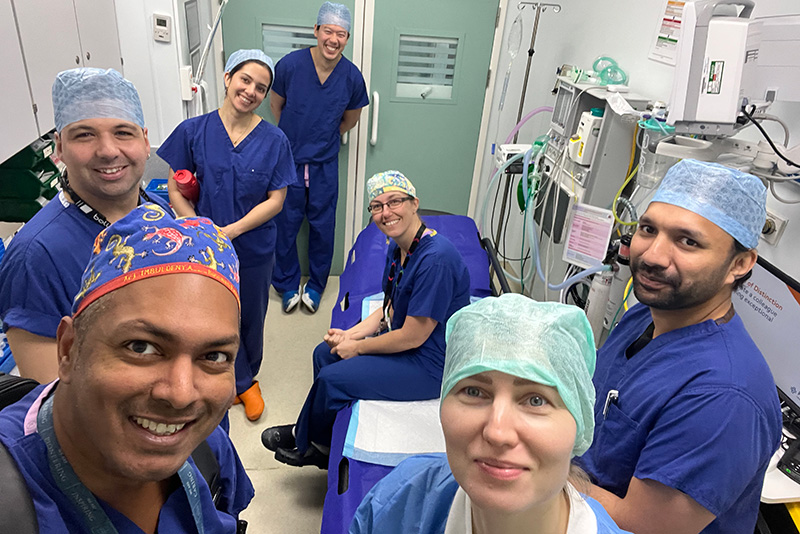
Why Choose OrthoLongevity?
At OrthoLongevity, we deliver care built on innovation, compassion and clinical excellence. Led by Dr Arj Imbuldeniya, our clinic uses advanced therapies within our holistic Ortholongevity™ approach to help patients regain mobility and improve their quality of life. With access to the latest technologies and a dedicated, compassionate team, we focus on finding the right treatment for every individual.
Real Experiences of Hip Replacement Recovery
Choosing hip replacement surgery is a significant decision. Read how patients treated with advanced techniques, including the Röttinger approach, have experienced reduced pain, faster recovery and a confident return to daily life.

Hip replacement recovery
After a hip replacement operation I was back in the gym 6 weeks later and am now training for an across Britain bike ride.
Niall
Hip replacement success
I was delighted to have had Dr Arj Imbuldeniya do my hip replacement. I was recommended to use him by my husband who had, had a hip replacement a couple of years ago.
Patient
Book Your Consultation
If hip pain is affecting your mobility or quality of life, a specialist consultation is the first step towards finding the right solution.
Meet with Dr Arj Imbuldeniya at OrthoLongevity to discuss whether a Röttinger hip replacement is suitable for you. You’ll receive a thorough assessment, clear guidance and a personalised treatment plan tailored to your goals, lifestyle and long-term joint health.
Frequently Asked Questions
Many patients considering hip replacement surgery want to understand what to expect before proceeding. Here are some of the most common questions we’re asked about the Röttinger approach:
The Röttinger approach, developed by Heinz Röttinger in Munich, is a muscle-sparing hip replacement technique that accesses the joint by working between natural muscle planes rather than cutting through muscle. This approach aims to minimise soft-tissue disruption, which may help reduce pain after surgery and support a faster recovery.
Most patients are able to stand and walk on the same day as surgery, with a return to many daily activities within 2 to 4 weeks. Full recovery typically progresses over 8 to 12 weeks, depending on your overall health and rehabilitation.
In most cases, there are fewer movement restrictions compared to traditional hip replacement techniques. Because muscles are preserved, patients can often move the hip more freely, though your surgeon will guide you on safe activity during recovery.
Not all patients are suitable for this technique. Your consultant will assess your anatomy, medical history and lifestyle goals before recommending the most appropriate surgical approach to achieve the best outcome.
Yes, it belongs to the anterior family of hip replacements. The Röttinger approach is an anterior-based, muscle-sparing technique, also known in the literature as the ABMS or modified Watson-Jones approach. It differs from the direct anterior approach (DAA) in the muscle interval used. It sits slightly further to the side, which lowers the risk to the lateral femoral cutaneous nerve and avoids the need for a traction table or intraoperative X-ray.
Dr Arj Imbuldeniya performs the Röttinger anterior approach at Cromwell Hospital in London and is one of a small number of UK surgeons offering it. Your consultation, examination and imaging will confirm whether it is the right approach for your hip.
Independent Reviews
Rated by Our Patients
We’re proud of the feedback we receive. Read verified reviews from patients on Doctify, reflecting their experience of our care, communication and surgical outcomes at OrthoLongevity.