
Request an appointment
Reserve your spot with our team in just minutes.
Other Knee Treatments
Hoffa Fat Pad Impingement Treatment in London
Understanding Hoffa Fat Pad Impingement
Hoffa’s fat pad, also known as the infrapatellar fat pad, is a soft tissue structure located beneath the kneecap (patella). It acts as a cushion between the patella and femur, helping to reduce friction and absorb shock during knee movement.
Hoffa fat pad impingement occurs when this tissue becomes irritated or compressed, often due to altered knee mechanics, overextension, injury, or repetitive strain. The condition commonly develops gradually but may also follow trauma or changes in activity.
Because anterior knee pain can have multiple causes, accurate diagnosis is essential. Assessment and treatment depend on identifying whether the fat pad is the primary pain source and understanding why irritation is occurring.
Symptoms of Hoffa Fat Pad Impingement
Symptoms vary in severity but commonly include:
Conservative Treatments
-
Sharp or aching pain at the front of the knee, typically just below the kneecap
-
Pain that worsens with full knee extension, prolonged standing, or kneeling
-
Swelling or tenderness around the lower edge of the kneecap
-
Difficulty fully straightening or bending the knee
-
Catching or locking sensations in some cases
-
Symptoms aggravated by squatting, stair descent, or repetitive knee movements
Common Causes and Related Conditions
Hoffa fat pad impingement may occur in isolation or alongside other knee conditions, including:
-
Biomechanical Overload Repetitive hyperextension or altered movement patterns increasing pressure on the fat pad.
-
Patellar Maltracking Abnormal kneecap movement can compress the infrapatellar fat pad during activity.
-
Post-Injury or Post-Surgical Changes Scar tissue, inflammation or altered joint mechanics following trauma or surgery.
-
Inflammatory Irritation Chronic inflammation leading to thickening and sensitivity of the fat pad.
Diagnosis and Treatment Options
Assessment begins with a detailed clinical consultation and physical examination to reproduce symptoms and assess knee mechanics. Imaging such as MRI may be used where appropriate to confirm fat pad inflammation and exclude other causes of anterior knee pain.
-
Non-surgical management Many patients improve without surgery. Treatment may include activity modification, targeted physiotherapy to optimise knee alignment and movement, and personalised pain management strategies.
-
Injection-based treatments In selected cases, image-guided injections may be used to reduce inflammation and support symptom relief as part of a broader rehabilitation plan.
-
Surgical options When symptoms persist despite fully optimised conservative care, minimally invasive surgery may be considered. Procedures are tailored to the individual and may include arthroscopic debridement or partial fat pad resection where appropriate.
-
Ortholongevity™ approach Where appropriate, treatment for Hoffa fat pad impingement may form part of a wider Ortholongevity™ approach focused on preserving joint function, restoring optimal movement, and delaying or avoiding unnecessary surgery.
-
Bracing or Taping Using knee braces or taping techniques to offload pressure from the infrapatellar fat pad and support knee alignment.
Patient stories
Real feedback from our patients
Patient experiences following assessment and treatment for anterior knee pain and Hoffa fat pad impingement.

Knee Injection Recovery
After an arthroscopy with coblation therapy to the medial patellar facet and apex, I'm no longer in pain.
Knee Injections Patient
Calm care for Cortisone Injections
He has administered cortisone injections in BOTH of my knees on the same day! It was a great experience even though I am needle phobic and was a little nervous!
Ms Boulter
Book an Appointment with a Hoffa Fat Pad Specialist in London
If you are suffering from knee pain and suspect Hoffa fat pad impingement, early diagnosis and treatment can prevent long-term complications. Contact The West London Knee and Hip Clinic today to book an appointment with a leading knee specialist and take the first step towards recovery.
Frequently Asked Questions
Yes. Many patients improve with appropriate activity modification, physiotherapy and targeted treatment.
While not dangerous, untreated impingement can become chronic and limit activity if not properly addressed.
If anterior knee pain is persistent, worsening, or limiting daily activity, specialist assessment is recommended.
Why Choose The West London Knee and Hip Clinic?
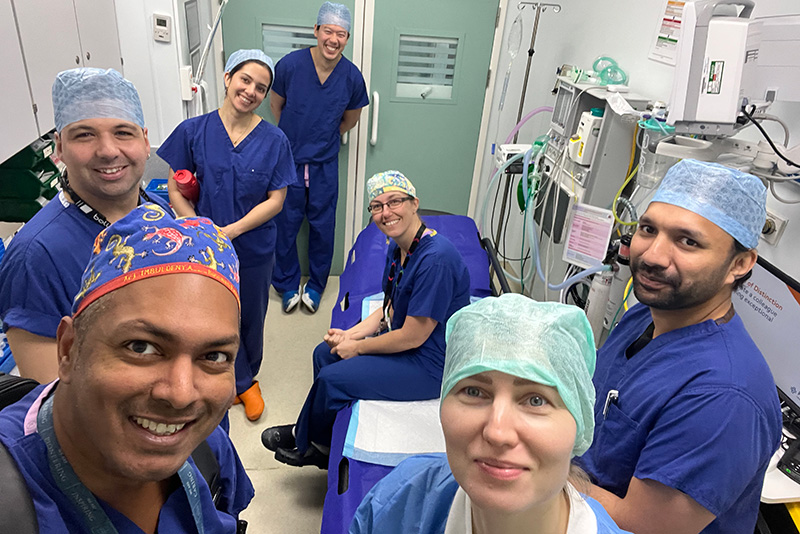
At The West London Knee and Hip Clinic, we deliver care built on innovation, compassion and clinical excellence. Led by Mr Arjuna Imbuldeniya, our clinic uses advanced therapies within our holistic Ortholongevity™ approach to help patients regain mobility and improve their quality of life. With access to the latest technologies and a dedicated, compassionate team, we focus on finding the right treatment for every individual.
Patient Review
What Our Patients Say
Independent Doctify-verified reviews from patients treated by Dr Arjuna Imbuldeniya and the team at The West London Knee & Hip Clinic.